Biomedical Waste Management
Definition & Overview
Biomedical Waste (BMW) comprises any waste generated during the diagnosis, treatment, or immunization of human beings or animals, in research activities pertaining thereto, or in the production or testing of biological materials and health camps. Healthcare facilities generate tons of discarded consumables daily—ranging from harmless cardboard boxes to highly infectious blood-soaked sponges, contaminated scalpel blades, and virulent microbiological cultures.
In India, the handling, segregation, collection, and disposal of medical waste is legally governed by the Biomedical Waste Management Rules, 2016[1], notified under the Environment (Protection) Act, 1986by the Ministry of Environment, Forest and Climate Change (MoEF&CC), with subsequent amendments in 2018 and 2019. These rules place strict statutory liability on all healthcare facilities (HCFs) to segregate waste at the exact point of generation.
Table of Contents(19 Sections)
Clinical Importance & Infection Control
A modern hospital is dedicated to patient healing and recovery; however, without scientific waste containment, it swiftly transforms into an active reservoir for nosocomial epidemics. According to the World Health Organization (WHO)[2], approximately 85% of healthcare waste is general, non-hazardous municipal waste, while 15% is categorized as hazardous (infectious, toxic, carcinogenic, or radioactive).
Prevents widespread transmission of drug-resistant pathogens (MRSA, VRE, C. difficile) and blood-borne viruses (HBV, HCV, HIV).
Eliminates accidental percutaneous punctures from discarded suture needles, scalpels, and intravenous trocars among nurses and housekeepers.
Prevents toxic contamination of groundwater tables from heavy metals, chemical reagents, discarded antibiotics, and landfill leachates.
Fulfills compulsory legal mandates under the EPA Act 1986 and NABH accreditation criteria, shielding hospitals from penal prosecution.
Major Sources of Healthcare Waste
Biomedical waste is generated across every clinical level, from tertiary multi-specialty research hospitals down to primary health sub-centres and mobile immunization units. Understanding the generation profile aids nurses in setting up appropriate containment stations.
| Generation Source | Predominant Waste Types Generated | Clinical Risk Category |
|---|---|---|
| Operation Theatres & Labour Rooms | Placentas, amputated limbs, pathological tissue, surgical drapes, suction tubing, blood bags, scalpels, trocars. | High Biological / Sharps |
| Intensive Care Units (ICUs) | Endotracheal tubes, central line sets, urinary bags, suction canisters, blood gas syringes, arterial lines. | Infectious Plastic & Sharps |
| Pathology & Microbiology Labs | Petri dishes, live culture stocks, vacutainer blood tubes, microscope slides, sputum cups, chemical stains. | Microbiological Biohazard |
| Outpatient Departments (OPD) & Wards | Used adhesive bandages, cotton swabs, tongue depressors, disposable gloves, empty medicine blister packs. | Moderate Infectious / General |
| Dialysis Units & Oncology Wards | Dialyzer filters, blood lines, fistula needles, cytotoxic chemotherapy infusion bottles, contaminated gloves. | Cytotoxic & Heavy Plastic |
| Immunization Clinics & Camps | Auto-disable (AD) syringes, broken glass vaccine ampoules, reconstituted vial stoppers, cotton pellets. | Mass Sharps & Glass |
Classification of Biomedical Waste
To manage medical waste scientifically, regulatory frameworks categorize waste based on physical state, chemical properties, and inherent pathogenicity.
Consists of materials contaminated with blood, pleural fluid, peritoneal fluid, cerebrospinal fluid (CSF), pus, or wound exudates. Examples include surgical dressings, cotton rolls, swabs, plaster casts, and items contaminated with blood from isolation wards.
Encompasses identifiable human tissues, amputated organs, biopsy specimens, surgical body parts, and placentas delivered in maternity wards. This category also covers animal carcasses and tissues generated in veterinary research institutions.
Items capable of puncturing or lacerating skin, posing the highest risk for occupational viral inoculation. Includes hypodermic needles, fixed-needle syringes, intravenous cannula introducers, scalpels, surgical blades, and disposable lancets.
Expired, spilled, or contaminated pharmaceuticals, antibiotics, and chemical drugs. Cytotoxic drugs (used in cancer chemotherapy) possess mutagenic, teratogenic, and carcinogenic properties and require dedicated high-temperature incineration.
Laboratory reagents, X-ray developing fluids, formalin solutions, expired disinfectants, and heavy metal residues (such as elemental mercury from broken thermometers or sphygmomanometers, which must be collected separately without incineration).
Contaminated radionuclides generated in nuclear medicine diagnostics (e.g., Technetium-99m, Iodine-131) and radiotherapy. Governed strictly under Atomic Energy Regulatory Board (AERB) safety rules—never placed in routine hospital waste bins.
Accounting for ~85% of total hospital mass: food leftovers, patient diet waste, clean office papers, carton boxes, and unsoiled plastic wrappers. Segregated into municipal bins (Green for biodegradable/wet, Blue/Black for dry recyclables) to avoid unnecessary treatment costs.
Color Coding Categories (India Rules 2016)
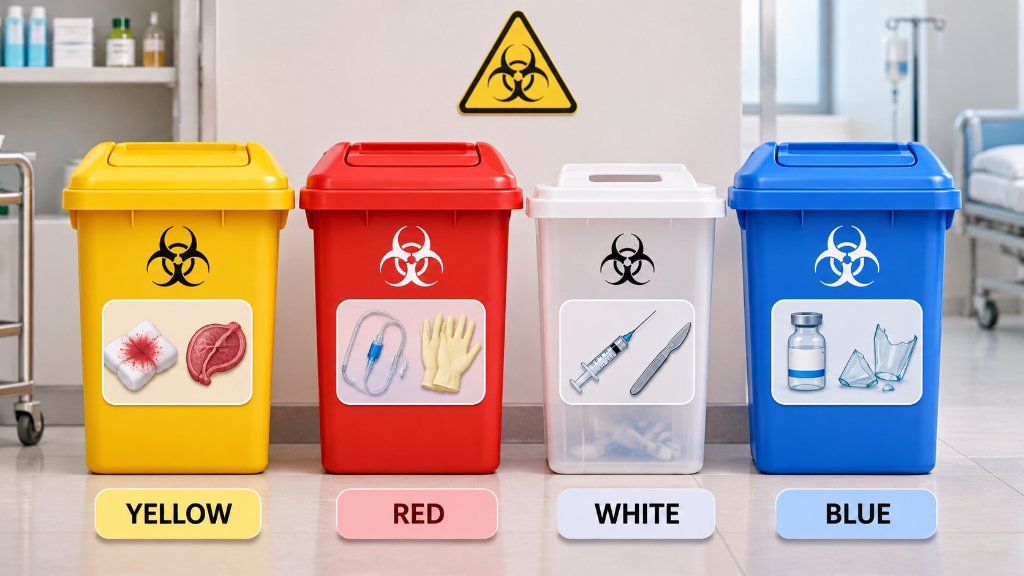
Schedule I of India's Biomedical Waste Management Rules, 2016 establishes a nationwide color-coding protocol utilizing four primary color streams: Yellow, Red, White (Translucent), and Blue. Every nurse must commit this matrix to memory.
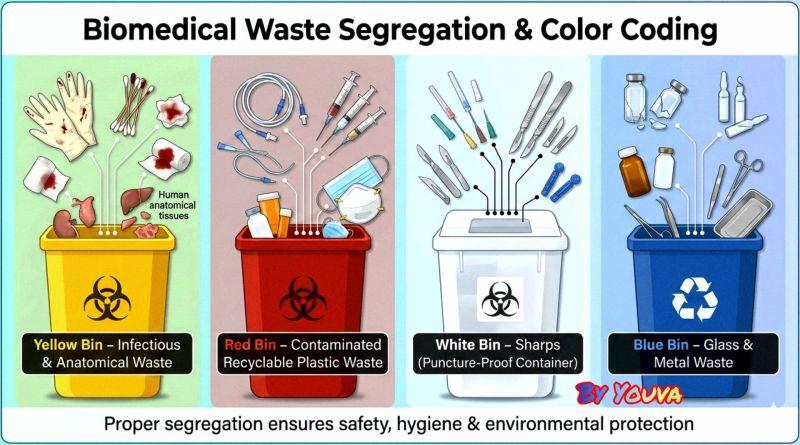
1. Yellow Category (Anatomical, Soiled & Chemical)
Permitted Waste Items:
- Human Anatomical Waste: Tissues, organs, body parts, fetuses below legal viability, and placentas.
- Animal Anatomical Waste: Experimental animal carcasses, body parts, and laboratory organs.
- Soiled Waste: Cotton, bandages, gauze dressings, plaster casts contaminated with blood, and linen soiled with body fluids.
- Expired or Discarded Medicines: Outdated antibiotics, vitamins, and cytotoxic cancer medications (sent in separate yellow bags with cytotoxic symbol).
- Microbiology, Biotechnology & Clinical Lab Waste: Blood bags, specimen containers, culture plates, and live attenuated vaccines (must be pre-treated at hospital lab before bagging).
- Chemical Waste: Expired disinfectants, formalin, and laboratory chemical residues.
Mandated Treatment & Disposal: Incineration in double-chamber incinerators (primary chamber ≥800°C, secondary chamber ≥1050°C), plasma pyrolysis, or authorized deep burial in rural areas lacking CBWTF access.
2. Red Category (Contaminated Recyclable Plastics)
Permitted Waste Items:
- Intravenous Equipment: IV infusion tubing, drip chambers, plastic IV fluid bottles (normal saline, dextrose).
- Drainage & Catheterization: Foley catheters, urine bags, chest drainage tubes, abdominal drain pipes, suction catheters.
- Disposable Plastic Syringes: Syringes without needles (needle detached or burned at source).
- Personal Protective Wear: Contaminated disposable nitrile/latex gloves, plastic aprons, face shields, and shoe covers.
- Other Plastics: Dialysis tubings, nebulizer masks, oxygen cannula tubes, and specimen vacutainer tubes (plastic).
Mandated Treatment & Disposal: Autoclaving, hydroclaving, or microwaving followed by mandatory shredding or mutilation to prevent unauthorized reuse, followed by authorized plastic recycling.
3. White Category (Sharps Including Metals)
Permitted Waste Items:
- Needles & Syringes with Fixed Needles: Hypodermic needles, insulin syringes, lumbar puncture needles, biopsy needles.
- Surgical Cutting Instruments: Scalpel blades, disposable lancets, razor blades, suture needles.
- Other Metallic Sharps: Contaminated trocar needles, guide wires, orthopedic K-wires, dental burs.
Mandated Treatment & Disposal: Autoclaving or dry heat sterilization followed by shredding, mutilation, encapsulation in concrete pits, or sanitary sharp pit burial.
4. Blue Category (Contaminated Glassware & Metallic Implants)
Permitted Waste Items:
- Glassware: Broken or unbroken medicine vials, antibiotic ampoules, IV glass bottles, laboratory glass slides, pipettes.
- Metallic Implants: Orthopedic screws, intramedullary rods, plates, prostheses, and cardiac pacemakers (cleansed).
- Important Exception: Glassware contaminated with cytotoxic chemotherapy drugs must NOT go into blue boxes; it belongs in the Yellow cytotoxic stream.
Mandated Treatment & Disposal: Disinfection through sodium hypochlorite immersion (1–2%), autoclaving, or microwaving, followed by recycling through authorized glass recycling agencies.
Nine Stages of Waste Management
Biomedical waste management is an unbroken chain of custody. If segregation fails at Stage 2, every downstream process (transportation, autoclaving, recycling) becomes biologically unsafe and environmentally hazardous.
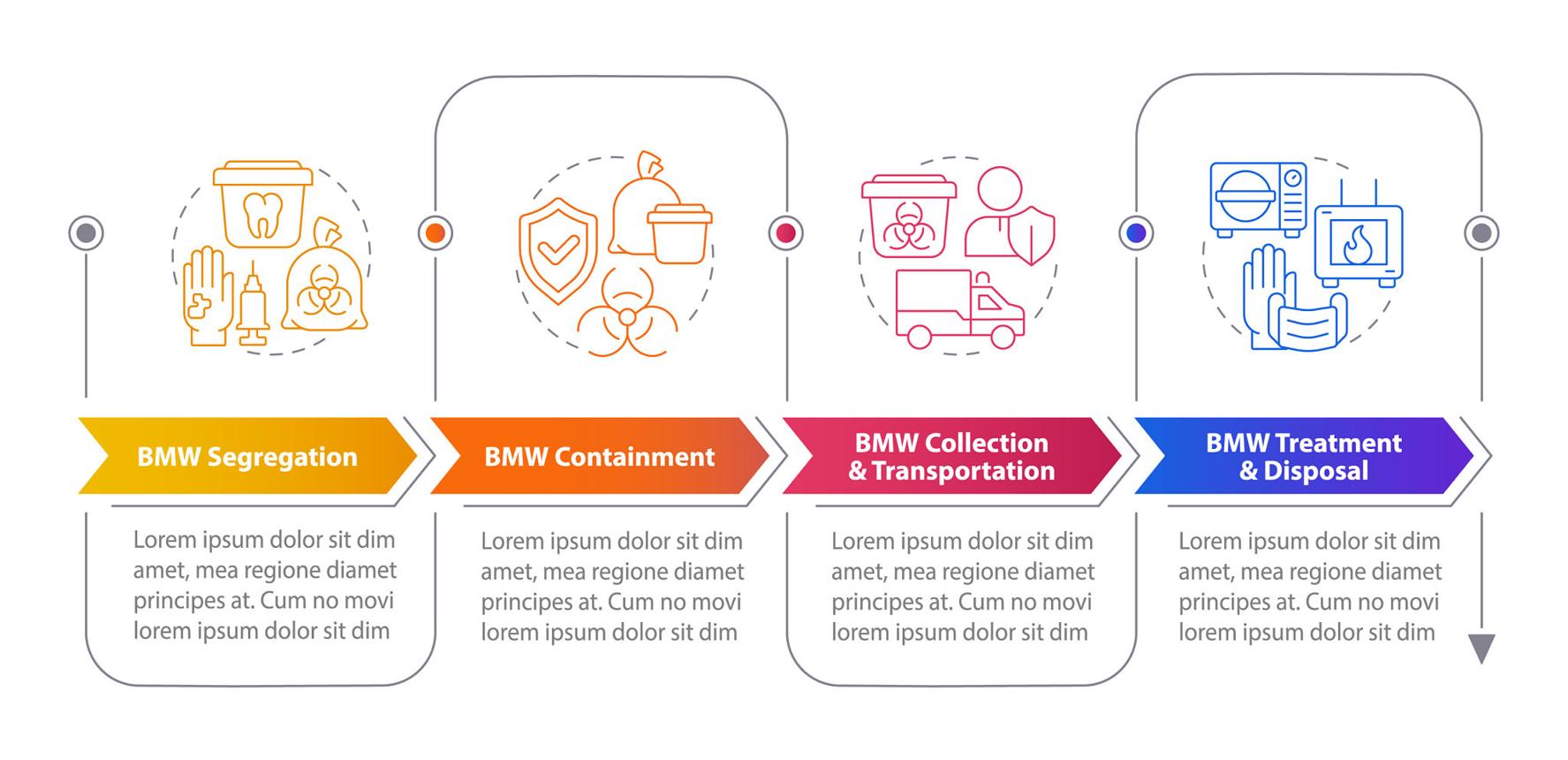
Practicing green healthcare purchasing: buying supplies with minimal packaging, adopting safe reusable medical devices where validated, and ordering pharmaceuticals efficiently to avoid expiration wastage.
Separating waste items directly at the patient bedside, nursing station, or operation theatre into the designated color bin immediately after use. Biomedical waste must never be mixed with general municipal refuse.
Using foot-operated, hands-free pedal bins lined with non-chlorinated color bags. Waste bags must be tied and sealed when three-fourths (3/4th) full. Overfilling and manual compaction by hand or foot are strictly prohibited.
All sealed bags and sharps boxes must display the international Biohazard Symbol, waste category, date, ward name, and a unique 2D barcode for GPS-integrated tracking from hospital to CBWTF facility.
Transporting sealed waste from wards to central storage using dedicated, covered, wheeled trolleys with smooth inner linings. Waste bags must never be carried against the body or dragged across hospital corridors.
Stored in a secure, well-ventilated, pest-proof, locked room away from patient care wards and hospital kitchens. Under Indian law, untreated biomedical waste must never be stored beyond 48 hours without reporting to the State Pollution Control Board.
Collected by authorized Common Bio-medical Waste Treatment Facility (CBWTF) dedicated GPS-fitted, leak-proof vehicles with digital barcode scanning at dispatch.
Processing waste via high-temperature incineration, pressurized steam autoclaving, hydroclaving, microwaving, or chemical disinfection to neutralize biological hazards completely.
Treated plastic shredding forwarded to registered plastic recyclers, disinfected glass cullet sent to glass foundries, non-recyclable residues encapsulated, and incineration bottom ash directed to secured sanitary landfills.
Treatment & Disposal Technologies
The goal of waste treatment is twofold: complete pathogen destruction and volume reduction. The method selected depends strictly on the physical nature of the material.
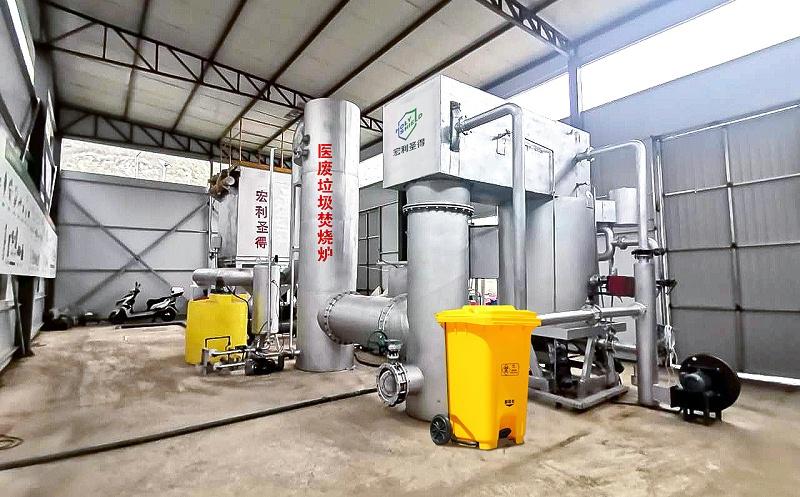
A high-temperature thermal oxidation process converting organic and biological waste into inert bottom ash, flue gases, and water vapor. Under CPCB norms, medical incinerators must feature:
- Primary Combustion Chamber: Operates at 800°C ± 50°C for primary waste breakdown.
- Secondary Combustion Chamber: Operates at 1050°C ± 50°C with a minimum gas residence time of 2 seconds to destroy dioxins and furans.
- Scrubbing Systems: Venturi scrubbers and baghouse filters remove acidic gases and particulates prior to atmospheric discharge.
- Contraindication: Chlorinated plastics (PVC) must never be incinerated due to toxic dioxin formation.
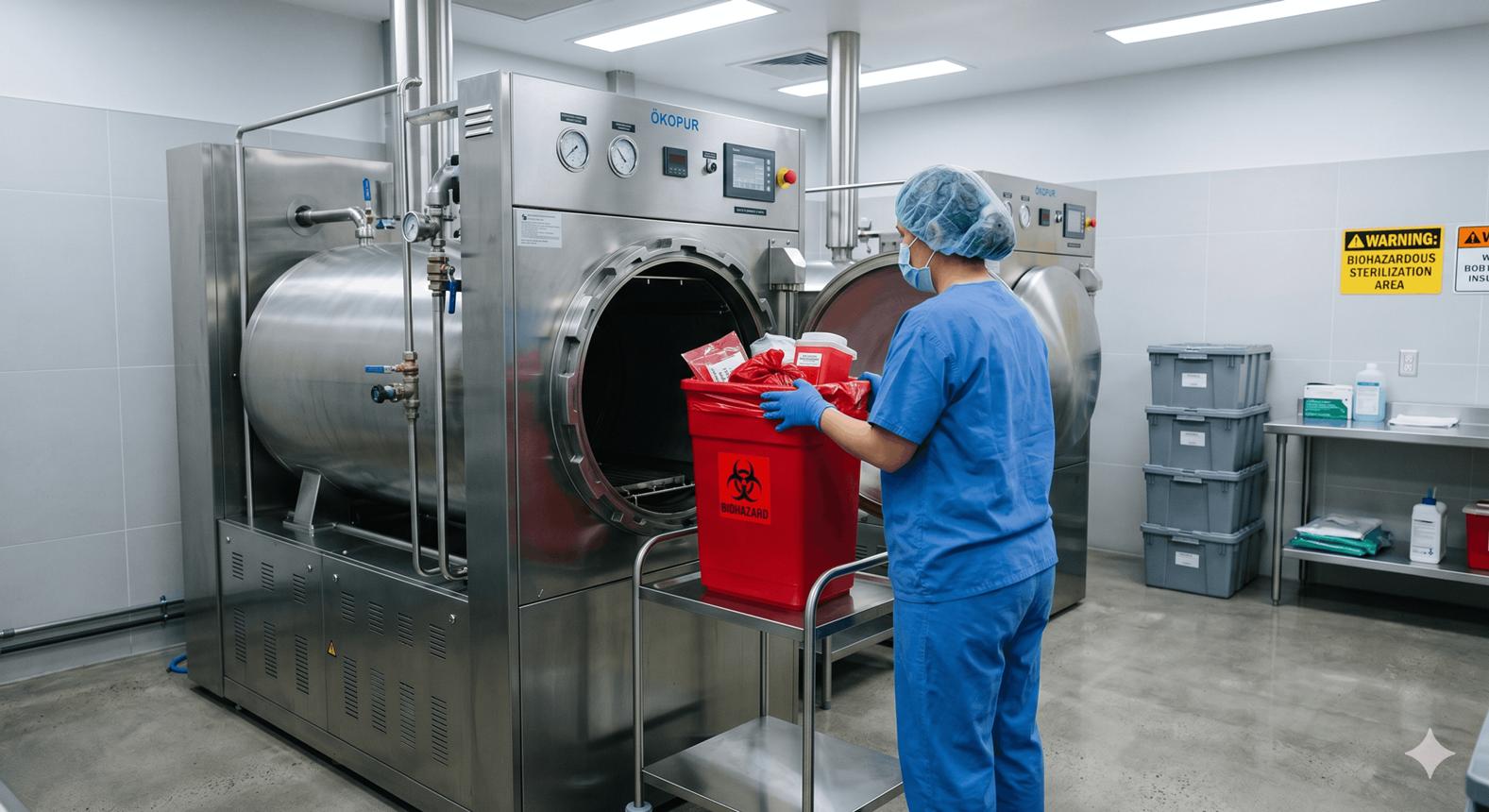
Sterilization utilizing saturated pressurized steam to achieve lethal microbial protein denaturation, including resilient bacterial endospores (Bacillus stearothermophilus). Standard validated parameters:
- Gravity Displacement: 121°C at 15 psi (105 kPa) pressure for a minimum of 60 minutes.
- Pre-Vacuum Autoclave: 132°C at 27 psi (186 kPa) for a minimum of 45 minutes.
- Post-Autoclave Shredding: Treated plastics are passed through heavy-duty industrial shredders to produce irregular plastic flakes, rendering them unidentifiable and ready for recycling.
- Chemical Disinfection: Immersion of liquid waste, glassware, or laboratory cultures in freshly prepared 1% to 2% Sodium Hypochlorite solution with a contact time of at least 30 minutes.
- Microwaving: Utilizes electromagnetic radiation (2450 MHz) to heat water molecules within biological cells, generating bactericidal thermal destruction without combustion.
- Sharp Encapsulation: Filling puncture-proof sharps boxes up to 3/4th with discarded metal needles, then adding a cement-sand mortar mixture (1:2 ratio). Once solidified, the block is safely deposited in a designated landfill pit.
Personal Protective Equipment (PPE)
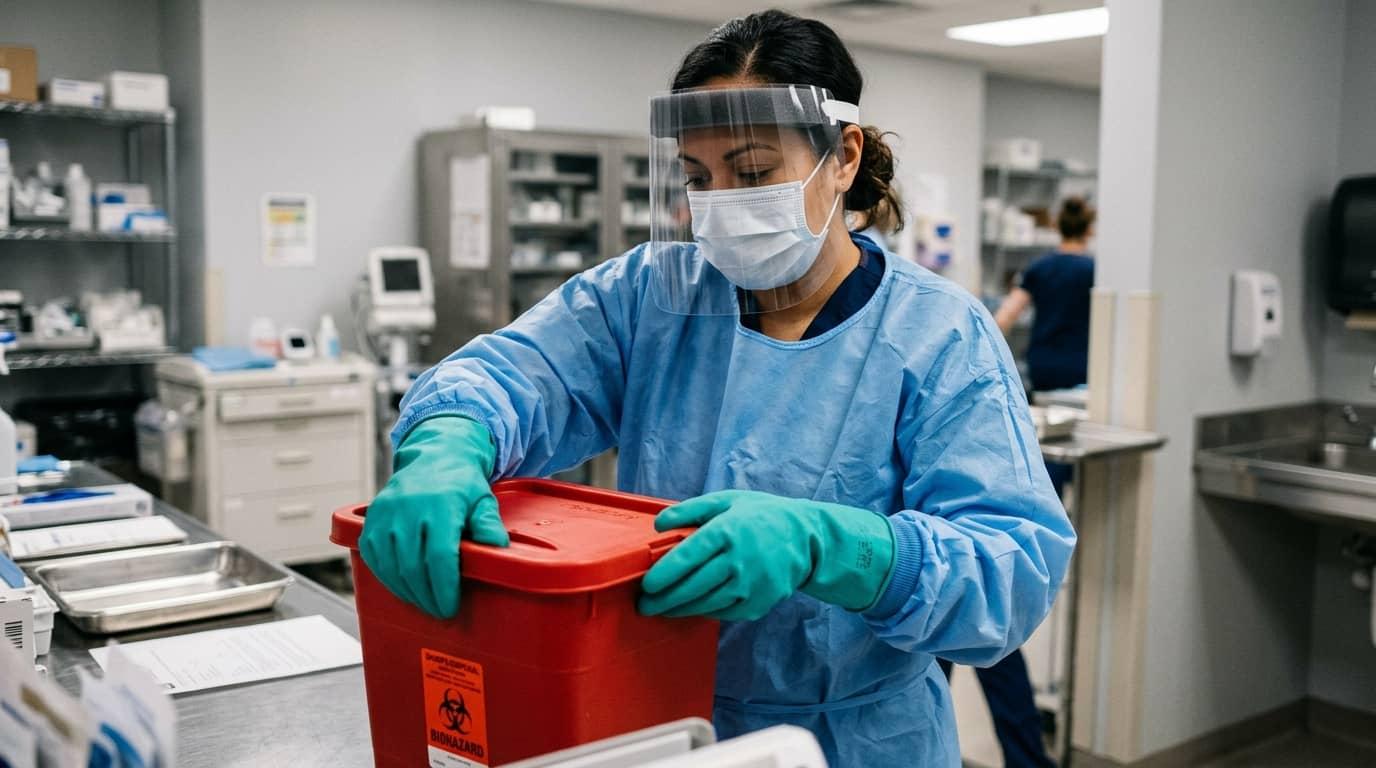
Healthcare workers and sanitation personnel handling biomedical waste must don task-specific PPE to guard against blood-borne inoculations, chemical aerosols, and cutaneous contamination.
| PPE Item | Protective Function & Clinical Application | Key Nursing Consideration |
|---|---|---|
| Heavy-Duty Nitrile / Utility Gloves | Thick puncture-resistant rubber gloves for handling waste bags, tying bags, and moving transport carts. | Thin exam gloves are NOT sufficient for waste trolleys. |
| Fluid-Resistant Apron / Gown | Prevents liquid seepage, blood splashes, and body fluid saturation onto nursing uniforms. | Discard into Yellow bag if disposable; launder if reusable. |
| Face Mask & Protective Goggles | Guards mucous membranes of mouth, nose, and conjunctiva from bio-aerosols and chemical splashes. | Mandatory during liquid waste handling and suction bottle drainage. |
| Enclosed Gumboots / Safety Shoes | Prevents sharp puncture penetration through soles and protects feet from chemical/liquid spills. | Open-toe slippers and canvas shoes are strictly prohibited. |
Nursing Roles & Ward Responsibilities
Nurses represent the primary generators of healthcare waste in bedside patient units. Waste management is not merely a housekeeping chore—it is an integral nursing competency ensuring patient safety and environmental protection.
Always carry color-coded receptacles or mobile disposal trays to the bedside. Never place used syringes or swabs on bed linen with the intention of sorting them later.
Never recap, bend, or break needles by hand. If recapping is an unavoidable clinical necessity, employ the single-handed "scoop" technique exclusively.
Continuously monitor bin fill levels. When bags or sharps containers reach 75% capacity, alert housekeeping staff to tie, barcode, and replace them immediately.
Educate patient relatives and visitors not to throw fruit peels, tea cups, or newspaper wrappings into yellow or red biomedical bins, directing them to green municipal dustbins.
Needle-Stick Injury & Exposure Protocol
Percutaneous needle-stick injuries (NSIs) pose the greatest occupational threat of transmitting Hepatitis B Virus (HBV), Hepatitis C Virus (HCV), and Human Immunodeficiency Virus (HIV). Rapid, methodical intervention significantly reduces seroconversion rates.
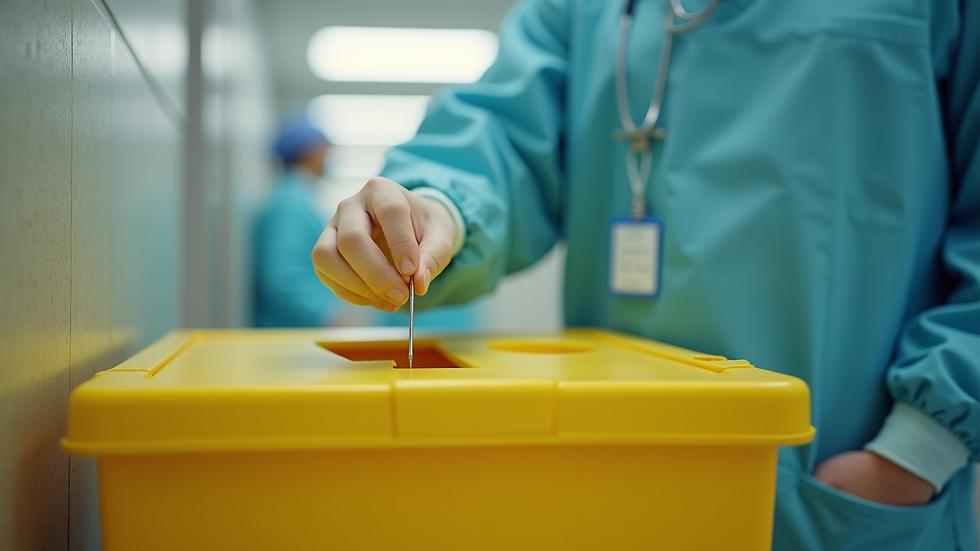
- Immediate Wound Decontamination: Immediately wash the puncture site under cold running tap water with mild soap for several minutes.
DO NOT squeeze, suck, scrub, or apply caustic antiseptics (bleach, alcohol) to the puncture site, as tissue trauma accelerates viral systemic absorption. - Mucous Membrane Exposure: If blood splashes into the eyes, irrigate copiously with sterile normal saline or clean water for 10–15 minutes with eyes open. Rinse mouth thoroughly if splashed.
- Immediate Incident Reporting: Report immediately to the Nursing Supervisor, Infection Control Officer, and Casualty Medical Officer (CMO).
- Source Patient & Healthcare Worker Assessment: With informed consent, perform immediate rapid screening on the source patient for HBsAg, Anti-HCV, and HIV antibodies. Draw baseline blood from the injured nurse.
- Hepatitis B Prophylaxis: If the nurse is unimmunized or a non-responder (Anti-HBs titre <10 mIU/mL), administer Hepatitis B Immune Globulin (HBIG) 0.06 mL/kg along with the first dose of Hepatitis B vaccine ideally within 24 hours (maximum 7 days).
- HIV Post-Exposure Prophylaxis (PEP): If the source is HIV-positive or unknown high-risk, initiate 3-drug antiretroviral PEP (e.g., Tenofovir + Lamivudine + Dolutegravir) as soon as possible, ideally within 2 hours, and strictly within 72 hours. Continue therapy for full 28 days.
- Serological Follow-Up: Perform periodic repeat antibody screening for HIV, HBV, and HCV at 6 weeks, 3 months, and 6 months post-exposure.
Common Segregation Errors & Solutions
Despite comprehensive training, routine clinical audits routinely unmask predictable segregation blunders. Recognizing these pitfalls prevents environmental cross-contamination and occupational harm.
| Frequent Error Observed | Underlying Hazard Created | Correct Practice Required |
|---|---|---|
| Discarding used needles into Yellow or Red plastic bags | Needle punctures plastic bag, piercing the leg or hand of housekeeping staff carrying the bag. | Needles must ALWAYS go into White translucent puncture-proof containers immediately. |
| Mixing general trash (banana peels, tea cups) into Yellow bags | Dramatically increases hospital incineration expenses and causes excessive boiler fuel consumption. | Throw food leftovers and clean paper strictly into municipal green/black bins. |
| Discarding broken glass vials into Red plastic bags | Sharp glass shards cut through the red bag, injuring handlers and jamming recycling shredders. | Glass ampoules and medicine vials belong in the Blue box/container exclusively. |
| Two-handed needle recapping after giving an injection | The most frequent cause of needle-stick injuries among nursing interns worldwide. | Never recap needles. Drop syringe-needle unit directly into sharp box or use needle burner. |
| Compressing overflowing waste bags by hand or foot | Aerosolizes infectious droplets and risks unseen sharps puncturing footwear or gloves. | Never compress waste. Seal bags when 3/4th full and replace with fresh liner. |
Healthcare Team Responsibilities
Effective hospital waste governance relies on synergistic teamwork across all hospital tiers. Each stakeholder group maintains distinct legal and functional obligations.
Point-of-generation segregation during surgical incisions, suturing, invasive biopsies, and bedside clinical procedures.
Continuous bedside segregation, supervision of ward bins, sharp box changeover at 3/4th capacity, and attendant education.
Mandatory pre-treatment and autoclaving of clinical microbiology cultures before bagging; safe chemical neutralizations.
Safe tying of 3/4th full bags, barcoding, intramural transport via dedicated trolleys, and temporary storage sanitization.
Conducting unannounced ward audits, tracking sharp injuries, monitoring PEP regimens, and staff training compliance.
Providing non-chlorinated bags, puncture-proof bins, PPE stock, annual CPCB statutory reporting, and CBWTF contracting.
Facility Prevention & Control Measures
Healthcare leadership must establish robust administrative engineering controls to guarantee institutional safety and regulatory compliance.
Ensure every bedside cubicle, dressing room, lab bench, and nursing station has an uninterrupted supply of 4-color foot-pedal bins fitted with corresponding non-chlorinated bags.
Display laminated bilingual/multilingual visual segregation charts directly above all waste receptacles, depicting exact items for yellow, red, white, and blue containers.
Provide full 3-dose Hepatitis B vaccination series and annual Tetanus toxoid boosters free of charge to all nurses, doctors, lab technicians, and housekeeping staff, with post-vaccination anti-HBs titre documentation.
Implement daily electronic logging of waste generation by weight per category per ward prior to CBWTF handover, maintaining transparency and verifying zero bag diversion.
High-Yield NCLEX & Board Exam Revision
Biomedical waste management questions appear consistently on nursing licensure exams (NCLEX-RN, NORCET, state nursing boards). Review this master reference matrix before clinical postings and examinations.
| Key Clinical Concept | High-Yield Exam Answer / Regulatory Standard |
|---|---|
| Principal Indian Legislation | Biomedical Waste Management Rules, 2016 (under Environment Protection Act 1986) |
| Total Color-Coded Streams | Four: Yellow, Red, White (Translucent), Blue |
| Placentas, Amputated Limbs & Organs | Yellow Bag (Human Anatomical Waste → Incineration / Plasma Pyrolysis) |
| Blood-Soiled Gauze, Cotton & Dressings | Yellow Bag (Soiled Waste → Incineration) |
| IV Bottles, Tubing, Catheters & Urine Bags | Red Bag (Contaminated Recyclable Plastics → Autoclave + Shred + Recycle) |
| Syringe Without Needle & Gloves | Red Bag (Recyclable Plastic) |
| Needles, Scalpel Blades, Lancets | White Translucent Puncture-Proof Container (PPC) → Autoclave/Dry Heat + Sharp Pit |
| Medicine Glass Vials & Ampoules | Blue Cardboard Box / Container → Disinfection / Autoclave + Glass Recycling |
| Cytotoxic Cancer Drug Residues | Yellow Bag with Cytotoxic Hazard Symbol (>1050°C Incineration) |
| Maximum Untreated Storage Limit | Strictly 48 Hours |
| Bag & Sharp Box Fill Capacity | Tie and replace when 3/4th (75%) full; never overfill |
| First Action After Needle-Stick Injury | Wash immediately under running water with soap. Do NOT squeeze or suck wound. |
| HIV Post-Exposure Prophylaxis Window | Start ideally within 2 hours; maximum within 72 hours; complete 28-day course. |
References & Regulatory Guidelines
References & Regulatory Guidelines
This clinical study guide integrates regulatory mandates from the Ministry of Environment, Forest and Climate Change (MoEF&CC), Central Pollution Control Board (CPCB) clinical waste manuals, and World Health Organization (WHO) infection prevention directives.

Ramsingh Vishnoi is a serving Central Government Nursing Officer at the All India Institute of Medical Sciences (AIIMS), Rishikesh. Securing an All India Rank (AIR) of 468 in the prestigious AIIMS NORCET 10 examination and successfully qualifying as an RRB Nursing Officer (2025), he brings extensive frontline clinical experience in acute inpatient care, clinical procedures, emergency resuscitation, and medical-surgical nursing. As an esteemed reviewer on the Smart Nursing Prep Clinical Board, he verifies medical accuracy, hospital protocol alignment, and competitive examination relevance across foundational and advanced nursing guides.
Related Study Guides & Notes