Types of Beds Used in Medical and Nursing
1. Overview and Classification
A hospital bed is an important part of patient care. It is designed to provide comfort, safety, proper body positioning, and easy access for nursing procedures.[1] Different types of beds are used depending on the patient's age, medical condition, mobility, and treatment needs.[2]
Core Clinical Classification Flowchart
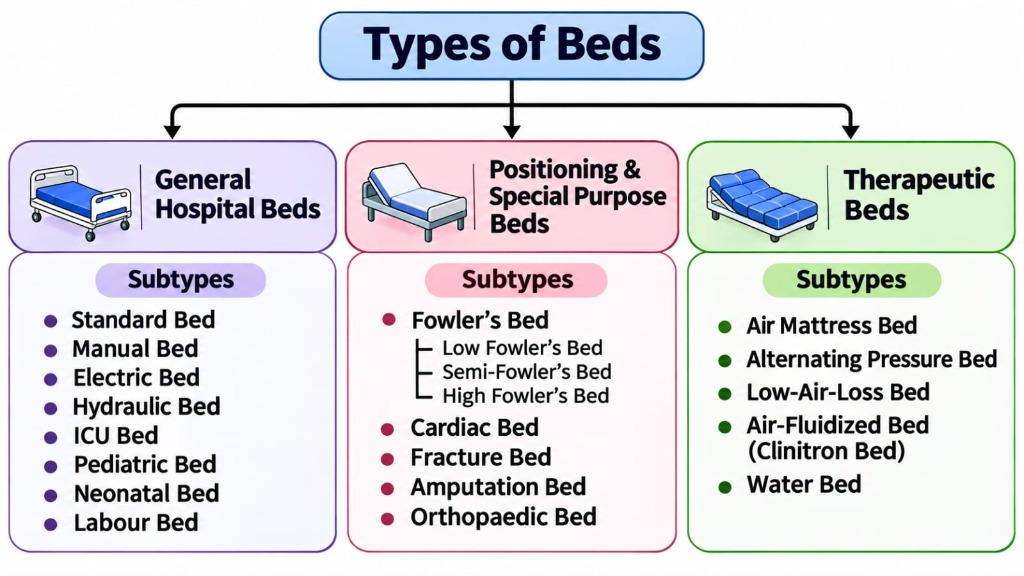
Clinical hierarchy: General Hospital Beds, Positioning & Special-Purpose Beds, and Therapeutic Pressure-Relieving Beds.
Table of Contents(25 Sections)
General Hospital Beds
Standard Hospital Bed
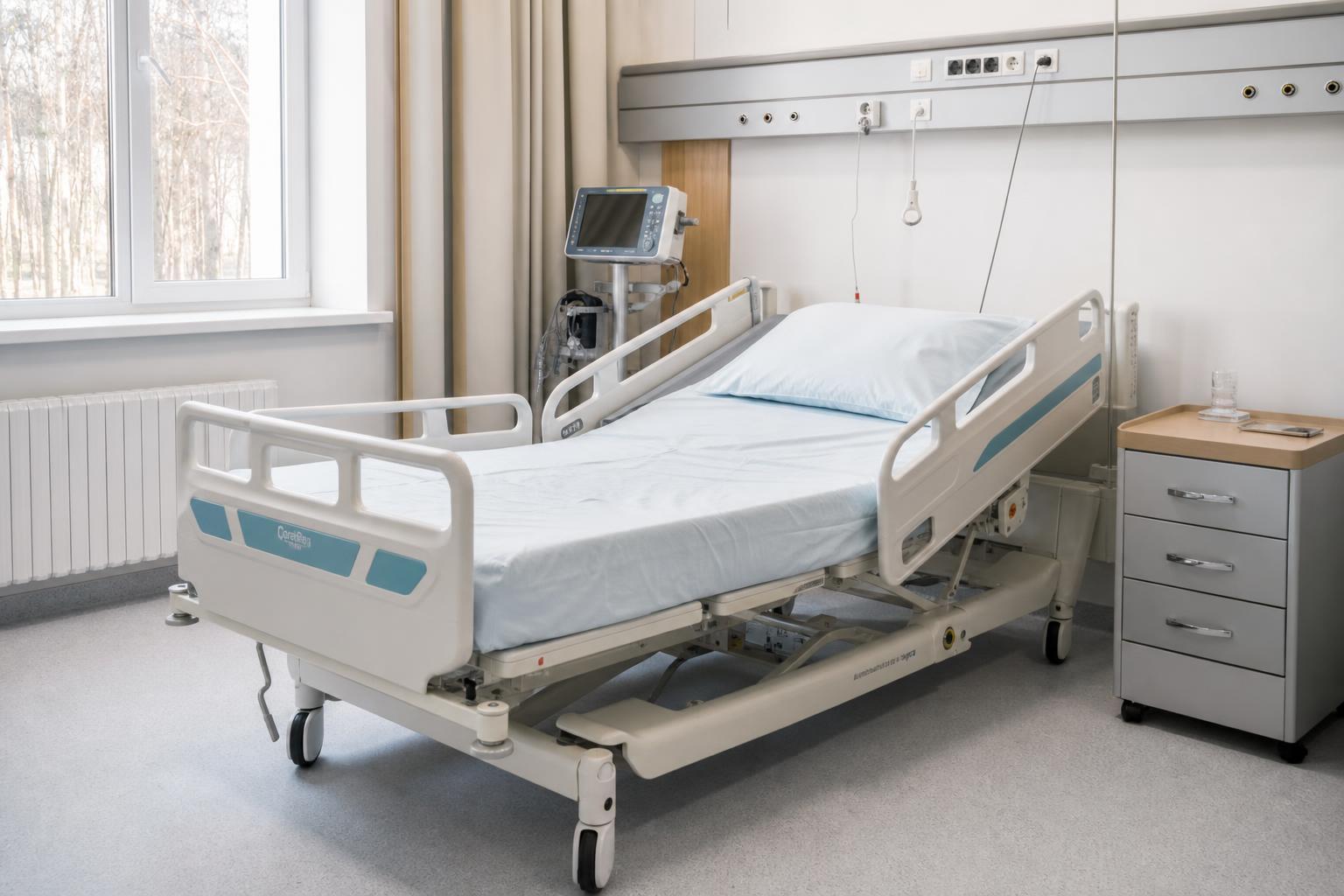
- It is the most commonly used bed in hospital wards.
- It consists of a mattress, bed frame, headboard, footboard, and side rails.
- It provides a comfortable place for patients to rest and recover.
- The bed may have adjustable head and foot sections.
- It is suitable for patients admitted for routine medical and surgical treatment.
- Nurses use it for providing daily care, administering medication, and monitoring patients.
Manual Bed
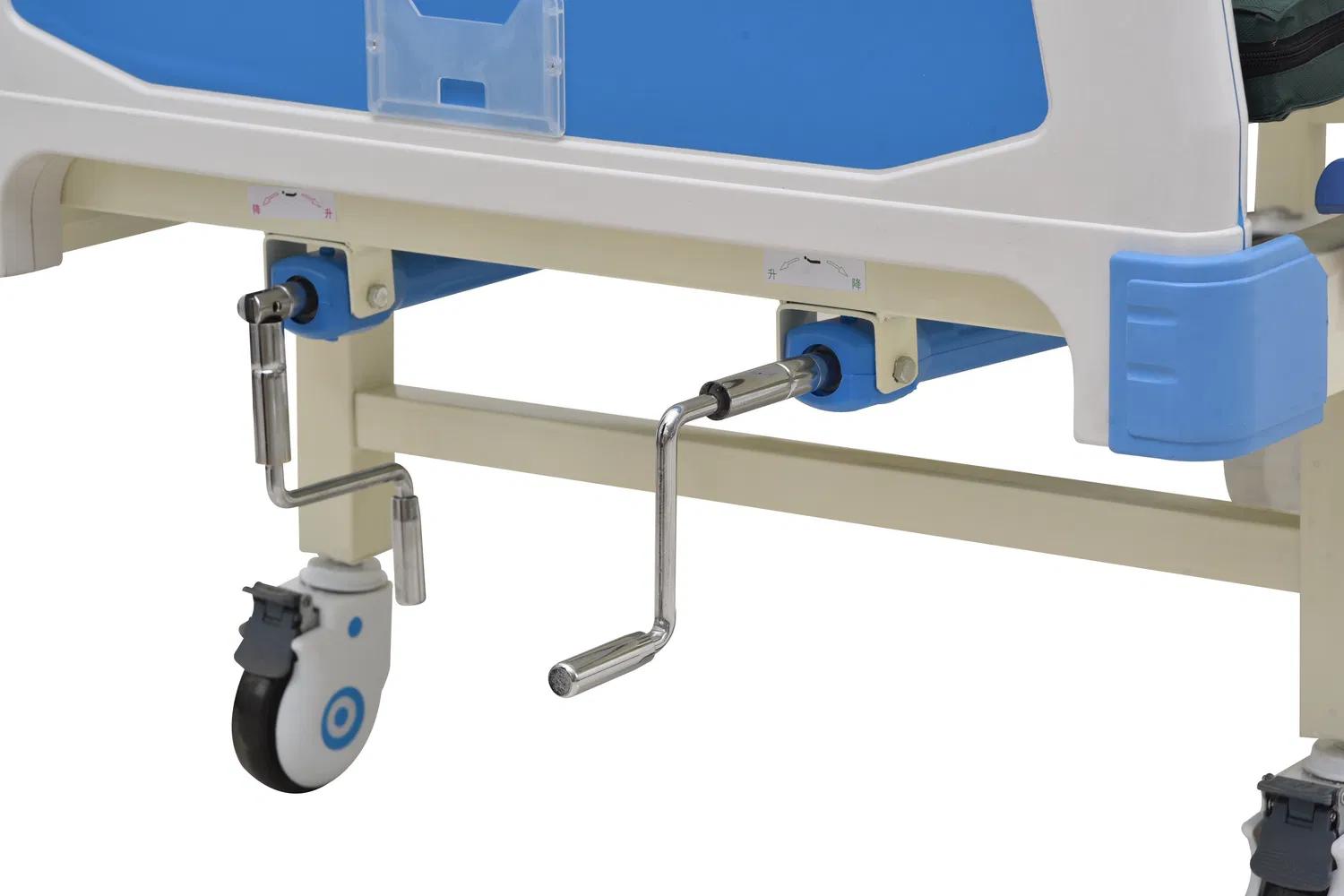
- A manual bed is operated by hand using mechanical cranks.
- The nurse or caregiver turns the handle to adjust the bed position.
- The head section, foot section, or overall height can be adjusted depending on the model.
- It does not require electricity to operate.
- It is commonly used in general wards and hospitals where simple bed adjustment is sufficient.
- It is economical and easy to maintain.
Electric Bed
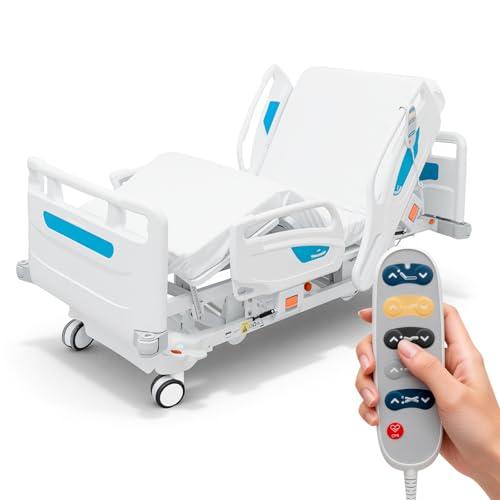
- An electric bed operates with the help of an electric motor.
- The patient or nurse can adjust the bed using a control panel or remote.
- It allows adjustment of the head, foot, and overall bed height.
- It reduces the physical effort required by nurses and caregivers.
- It provides comfort to patients who have difficulty changing their position.
- It is commonly used in ICUs, private rooms, and advanced hospital wards.
Hydraulic Bed
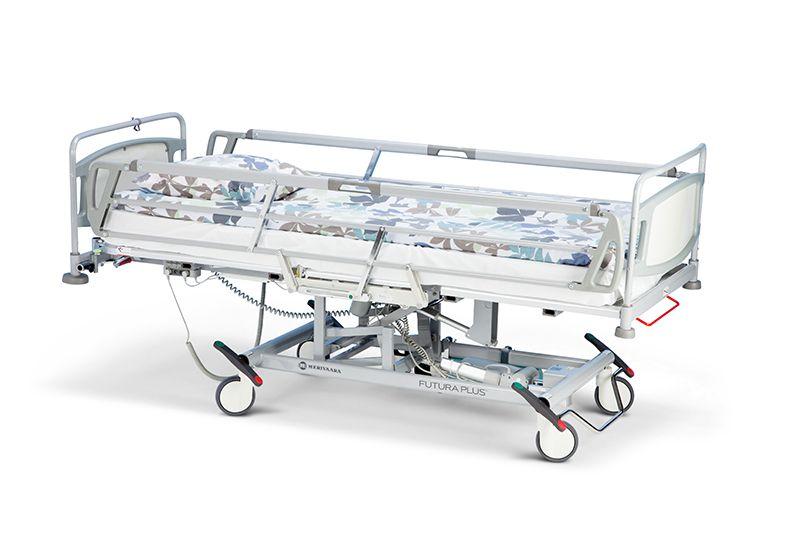
- A hydraulic bed uses a hydraulic system to adjust its height.
- It works through fluid pressure inside a hydraulic mechanism.
- The bed can be raised or lowered using a suitable control or foot pedal.
- It makes patient transfer and nursing procedures easier.
- It helps nurses provide care without excessive bending.
- It is useful in hospitals where frequent bed-height adjustment is required without relying on electrical outlets.
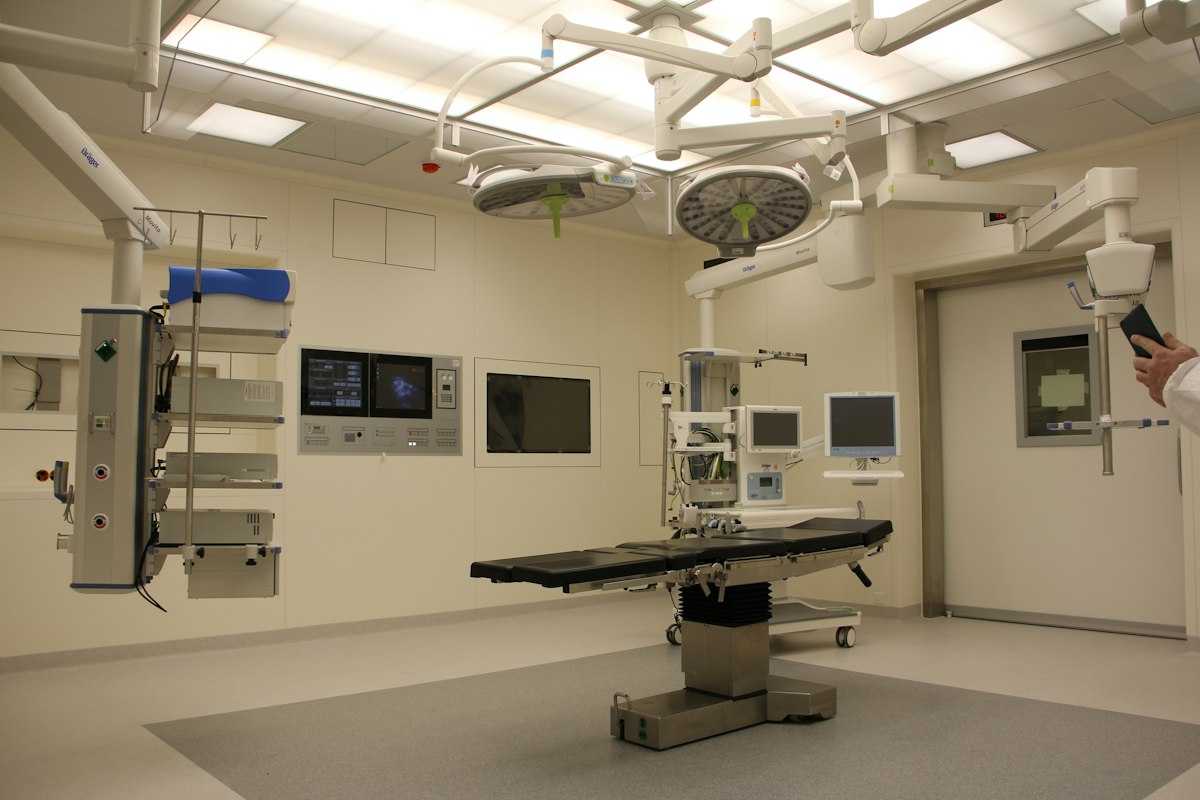
ICU Bed
- An ICU bed is specially designed for critically ill patients.
- It has multiple adjustable positions to meet the patient's medical needs.
- It usually contains side rails, wheels, brakes, and an electrical control system.
- Some models have a built-in weighing system and cardiac chair position.
- It allows easy access for ventilators, infusion pumps, and monitoring equipment.
- It helps nurses provide continuous observation and emergency care (such as rapid flat-back CPR release).
- It is commonly used in intensive care units.
Pediatric Bed
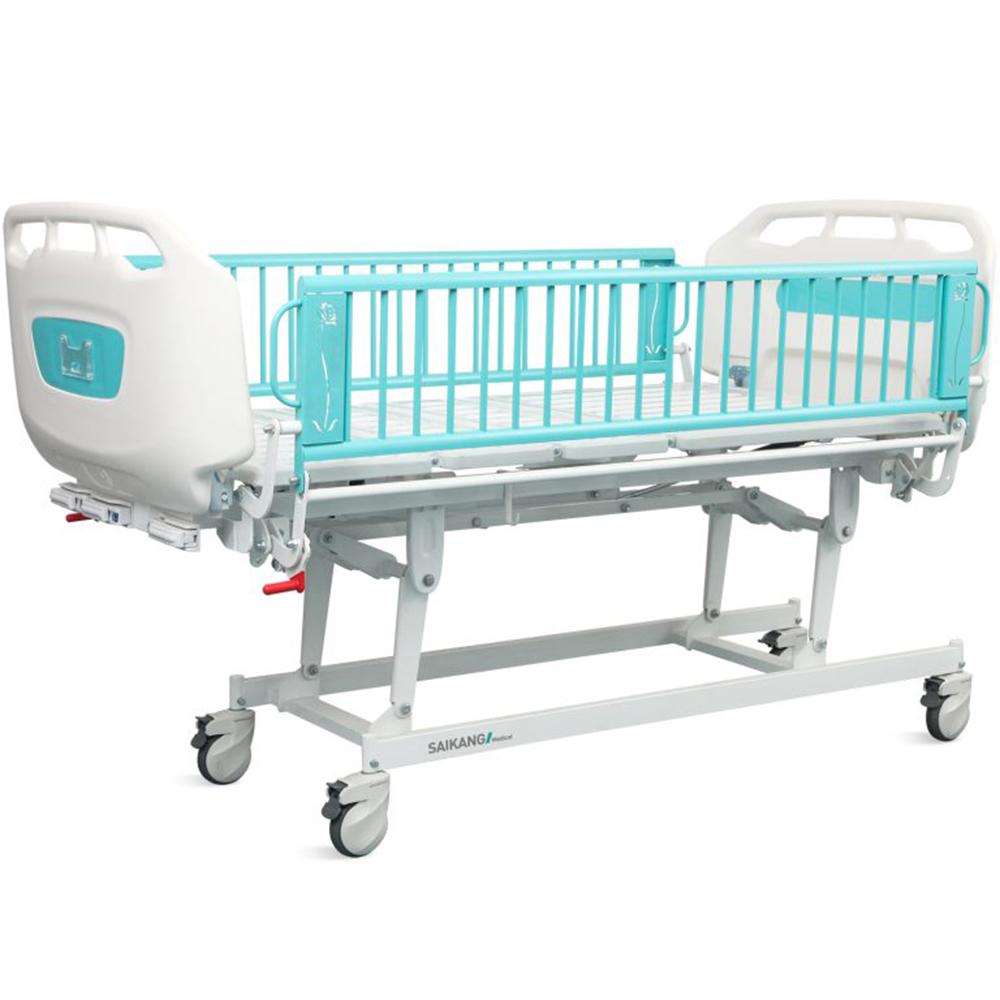
- A pediatric bed is designed specifically for infants and children.
- It is smaller than a standard adult hospital bed.
- It has protective side rails to prevent accidental falls.
- The design provides comfort and safety for growing children.
- Some beds have adjustable height and positioning features.
- It is used in pediatric wards for children requiring medical or surgical treatment.
Neonatal Bed
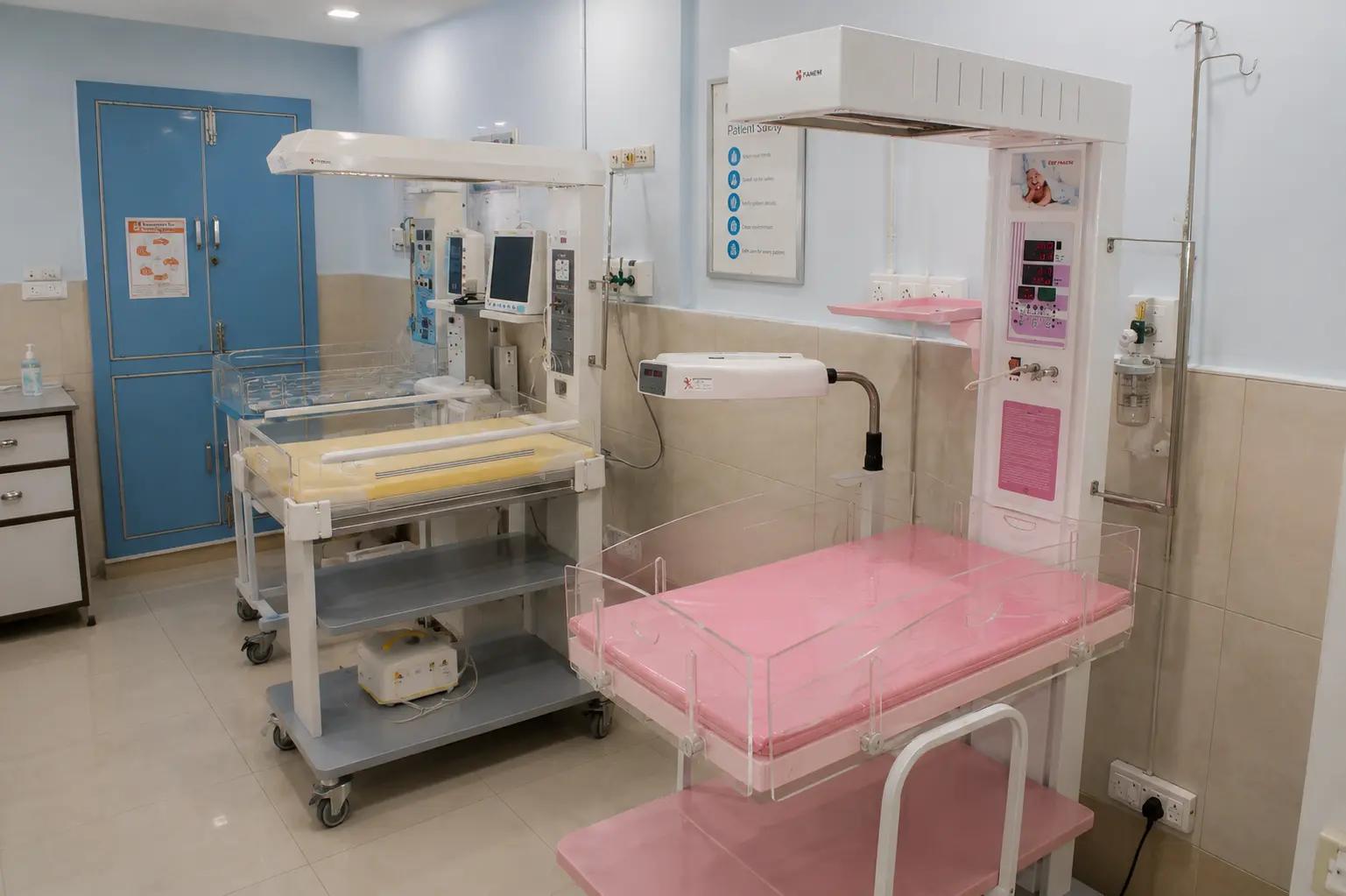
- A neonatal bed is designed for newborn babies.
- It provides a safe and comfortable environment for newborn care.
- It may include a temperature-control system to maintain body warmth.
- Some neonatal beds have transparent walls for easy continuous observation.
- They may be equipped with monitoring facilities.
- Used in neonatal units (NICU) for newborns requiring observation and treatment.
- Special neonatal beds include radiant warmers and closed incubators.
Labour Bed (LDR Bed)
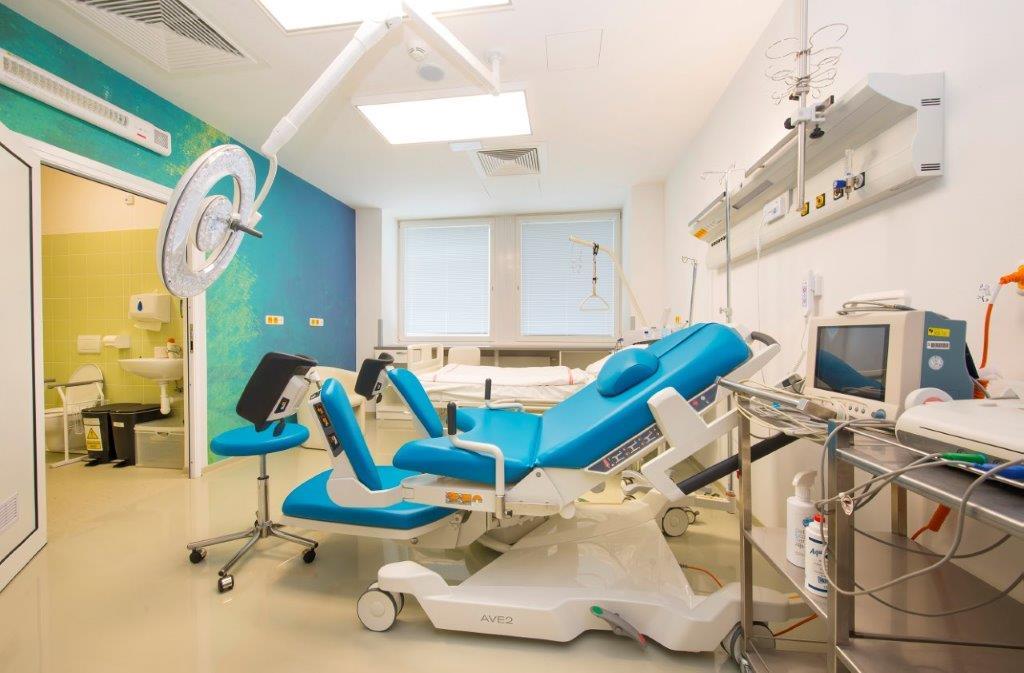
- A labour bed is used for women during the process of childbirth.
- It allows the mother to change her position during labour.
- It may have adjustable backrests and leg supports (stirrups).
- It provides comfort during contractions and labour examinations.
- It allows healthcare professionals to monitor the mother and baby continuously.
- It is designed to facilitate safe maternal care during labour, delivery, and immediate recovery (LDR).
Positioning and Special-Purpose Beds
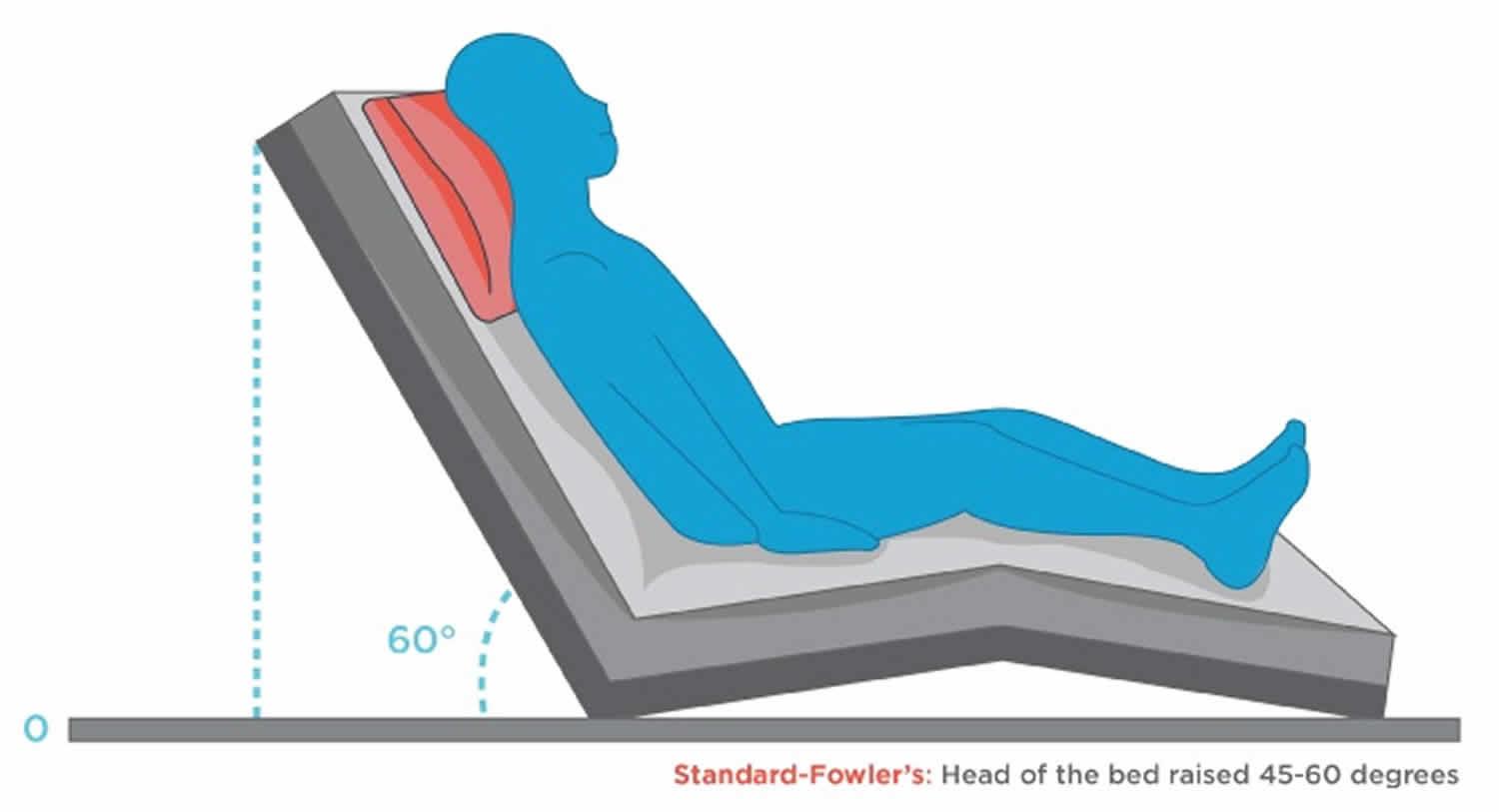
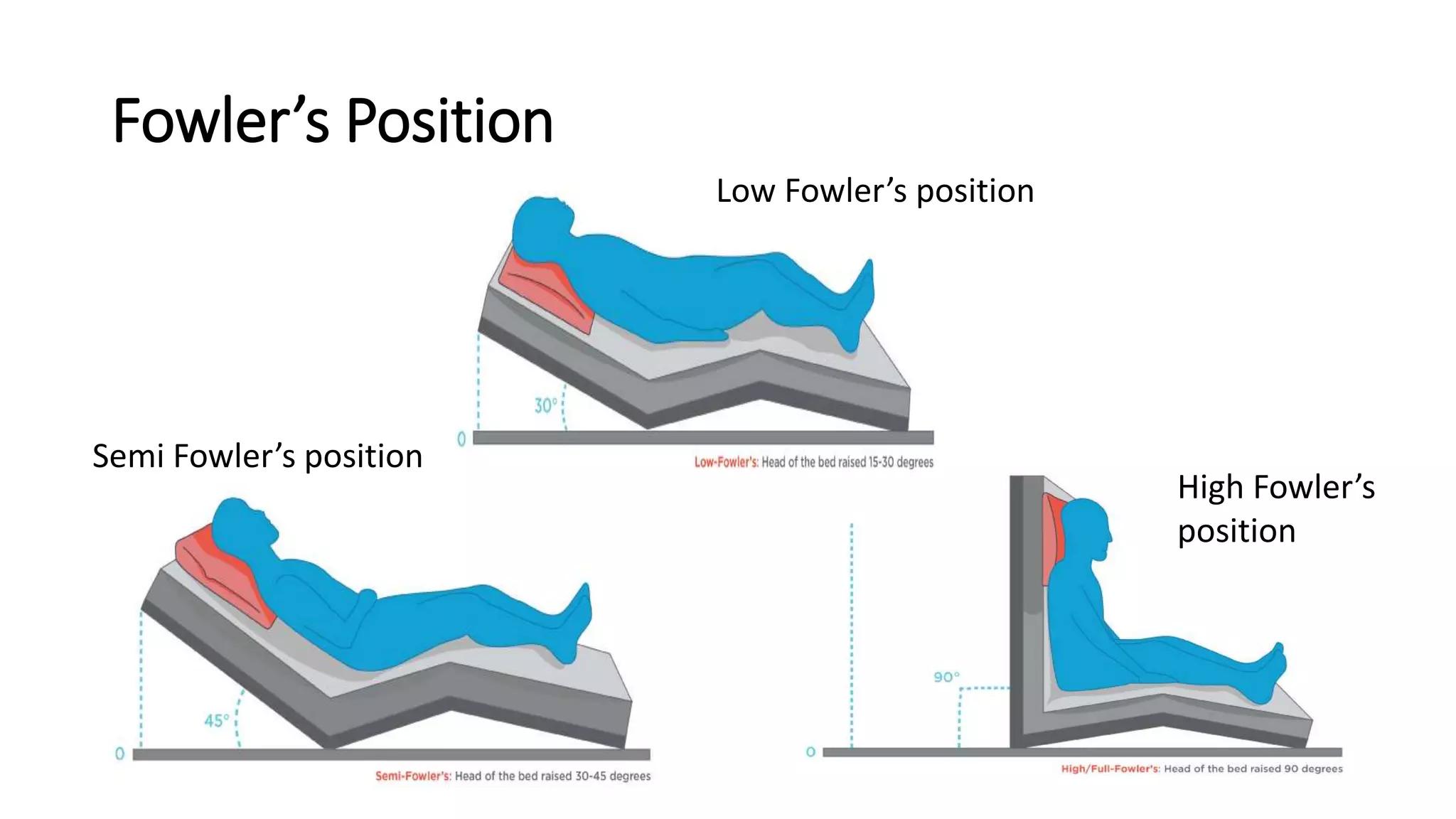
Fowler's Bed
- Fowler's bed refers to a bed arranged with the head end elevated.
- It helps patients maintain a sitting or semi-sitting position.
- It promotes lung expansion and makes breathing easier.
- It provides comfort to patients who cannot lie flat.
- It is useful during feeding, communication, and certain nursing procedures.
- It is commonly used for patients with respiratory and cardiac problems.
15° – 30°
- Slight elevation of upper body.
- Used for patients needing mild head elevation.
- Improves comfort during rest & recovery.
30° – 45°
- Improves thoracic chest expansion.
- Reduces pressure on the diaphragm.
- Standard for enteral tube feeding & dyspnea.
60° – 90°
- Almost upright 90° sitting posture.
- Maximizes gravitational lung expansion.
- Essential during acute breathlessness & meals.
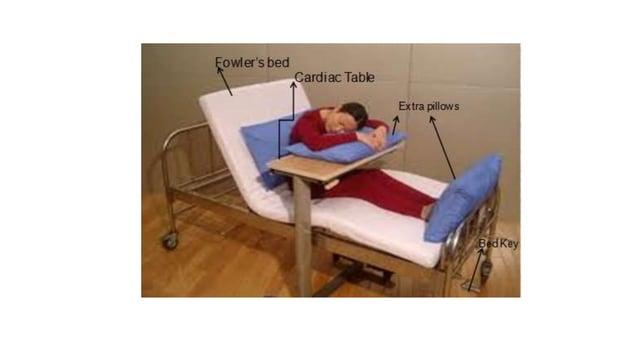
Cardiac Bed
- A cardiac bed is arranged to provide comfort to patients with severe cardiac problems.
- The head and upper body are supported with pillows or an adjustable backrest.
- A cardiac overbed table may be placed in front of the patient to support the arms and lean forward.
- It helps patients who experience breathlessness while lying flat (orthopnea).
- It allows the patient to rest in a comfortable sitting position.
- It is useful for patients with congestive heart failure (CHF) and orthopnea.
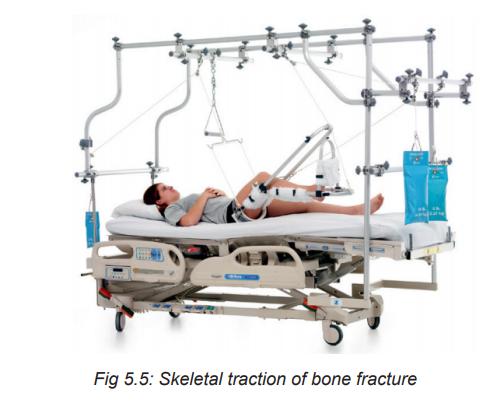
Fracture Bed
- A fracture bed is prepared for patients suffering from bone fractures.
- It generally has a firm mattress or wooden fracture board underneath for rigid support.
- It helps maintain the patient's anatomic body alignment without sagging.
- It reduces unnecessary movement of injured bone segments.
- Traction equipment may be attached when prescribed.
- It is commonly used for patients with pelvic, spinal, and lower-limb fractures.
- It helps nurses provide care while minimizing disturbance to the injured area.
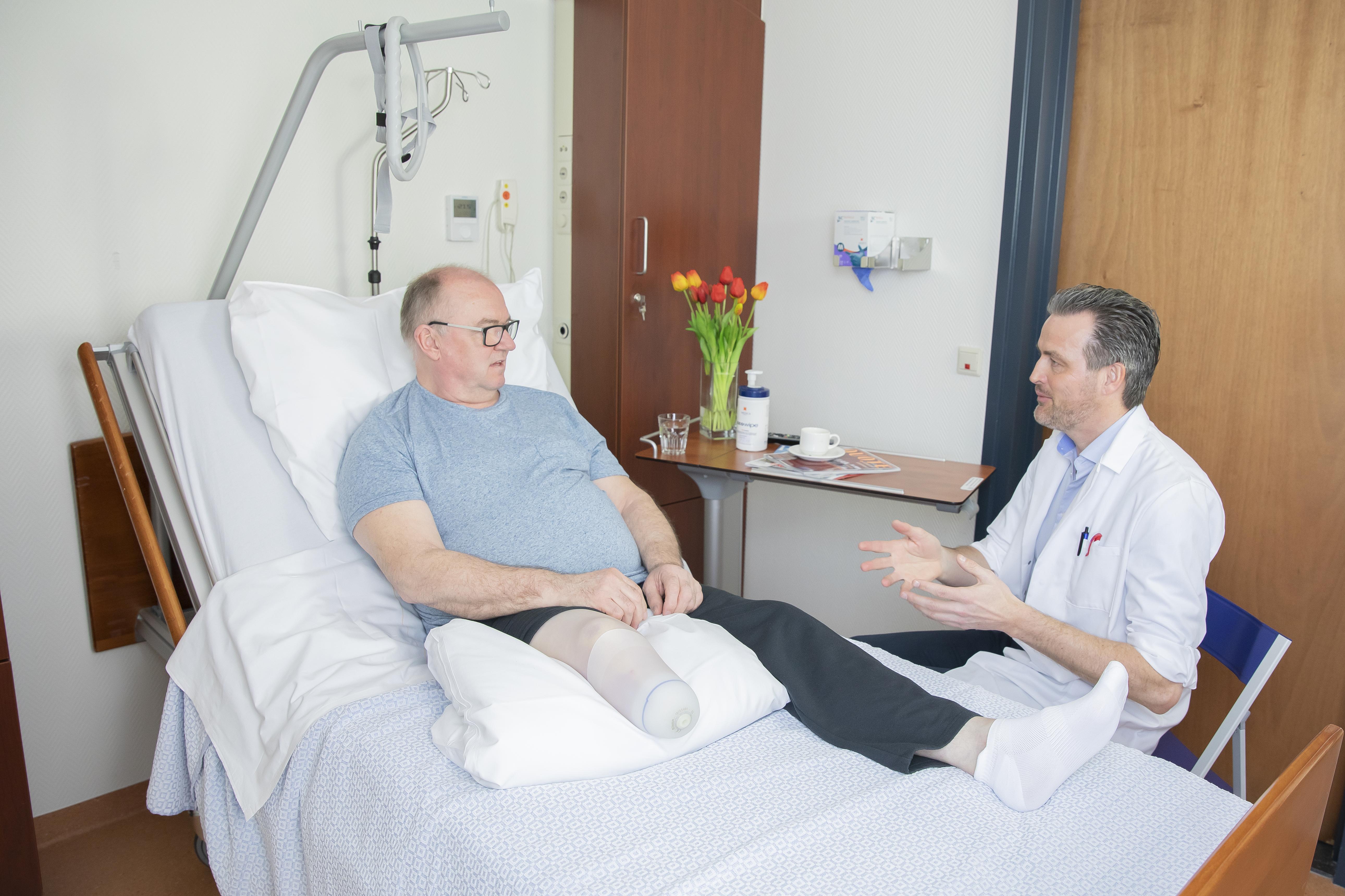
Amputation Bed
- An amputation bed is used for patients who have undergone surgical removal of a limb.
- It is arranged to provide comfort and firm support to the operated area.
- The residual limb is positioned according to the surgeon's instructions.
- Appropriate support helps manage edema, prevent flexion contractures, and maintain comfort.
- It allows nurses to observe the surgical wound and perform dressing changes readily.
- Special attention is given to stump circulation, pain management, and drainage.
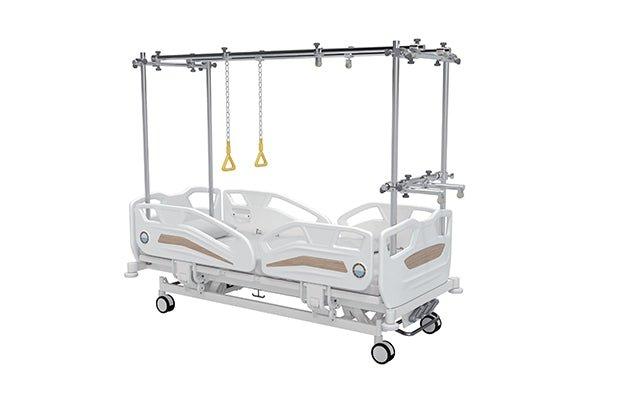
Orthopaedic Bed
- An orthopaedic bed is used for patients with complex bone, joint, and muscle disorders.
- It provides proper rigid body support and spinal alignment.
- It may have attachments such as Balkan traction frames, pulleys, and ropes.
- These attachments help maintain the continuous prescribed counter-traction of injured limbs.
- It is useful for patients with complex fractures, spinal injuries, and post-joint arthroplasty.
- It helps provide stability during rehabilitation and immobilisation.
Therapeutic and Pressure-Relieving Beds
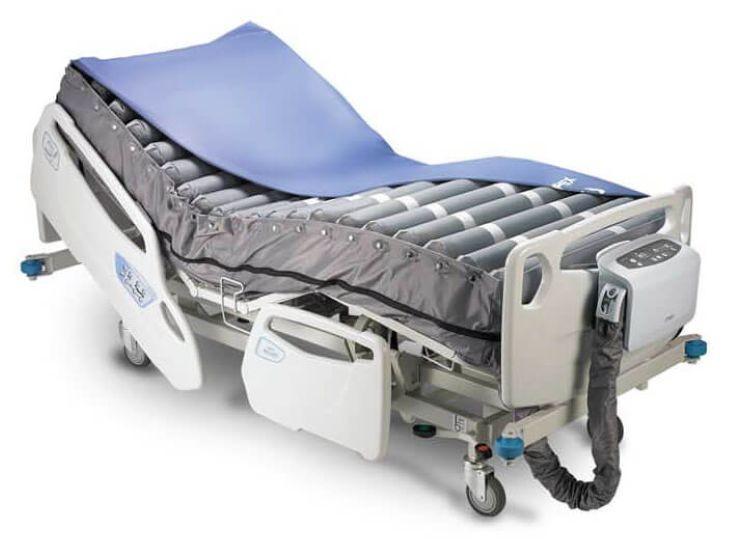
Air Mattress Bed
- It contains air-filled chambers or cells inside the mattress.
- The air provides cushioning and distributes body weight evenly over a wide surface.
- It helps reduce peak pressure on bony areas such as the heels, hips, and sacrum.
- Some models allow manual or automated adjustment of internal air pressure.
- It is useful for bedridden patients and those at risk of developing pressure injuries.
- Regular skin assessment and routine 2-hour repositioning are still essential.
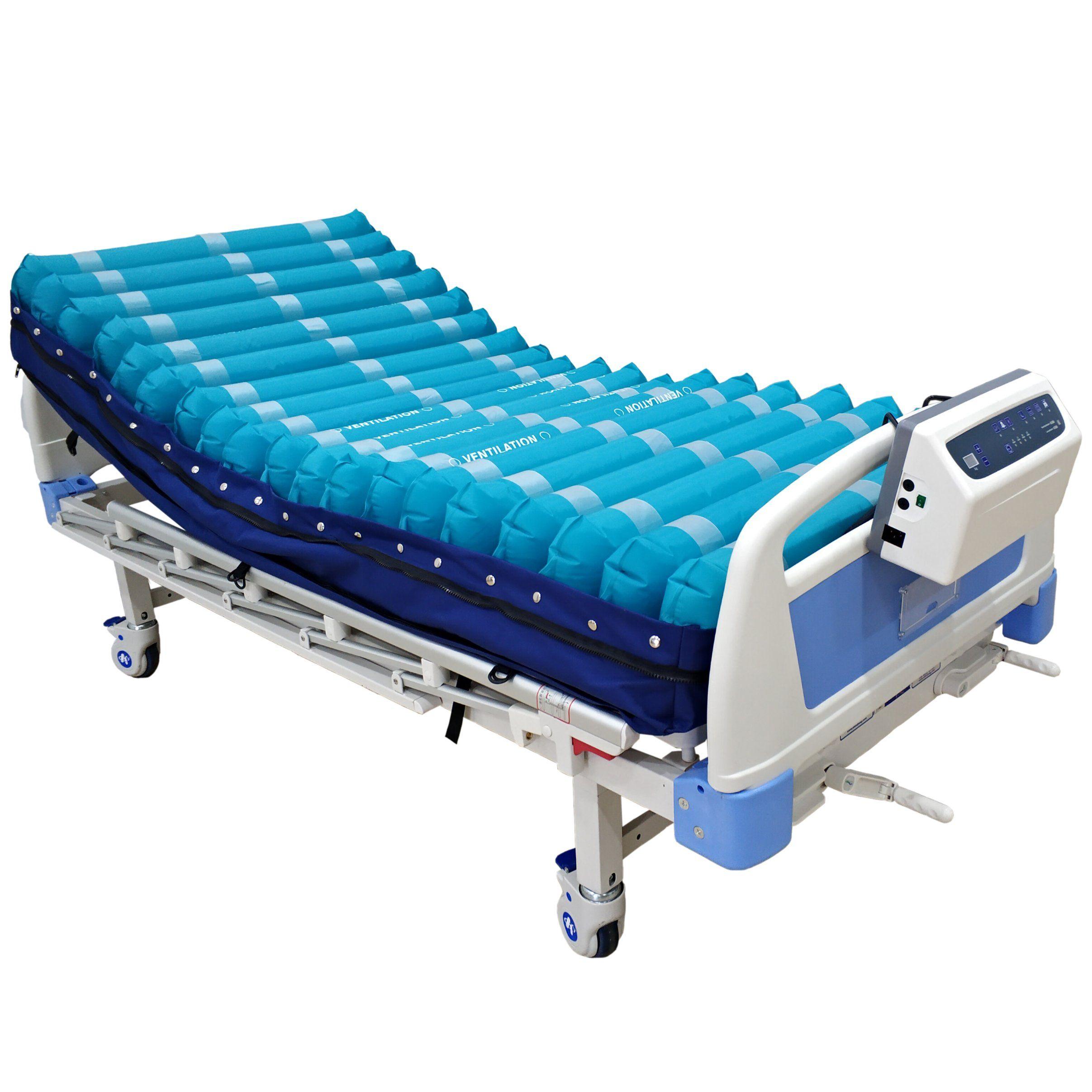
Alternating Pressure Bed
- It contains several interconnected tubular air cells.
- The air cells inflate and deflate alternately via an automated motorized air pump.
- This rhythmically changes the pressure points under the patient's body every few minutes.
- It helps improve pressure redistribution and stimulates microcapillary blood flow.
- It reduces prolonged continuous pressure on any single area of skin.
- It is used for patients with limited mobility and those at moderate to high risk of pressure ulcers.
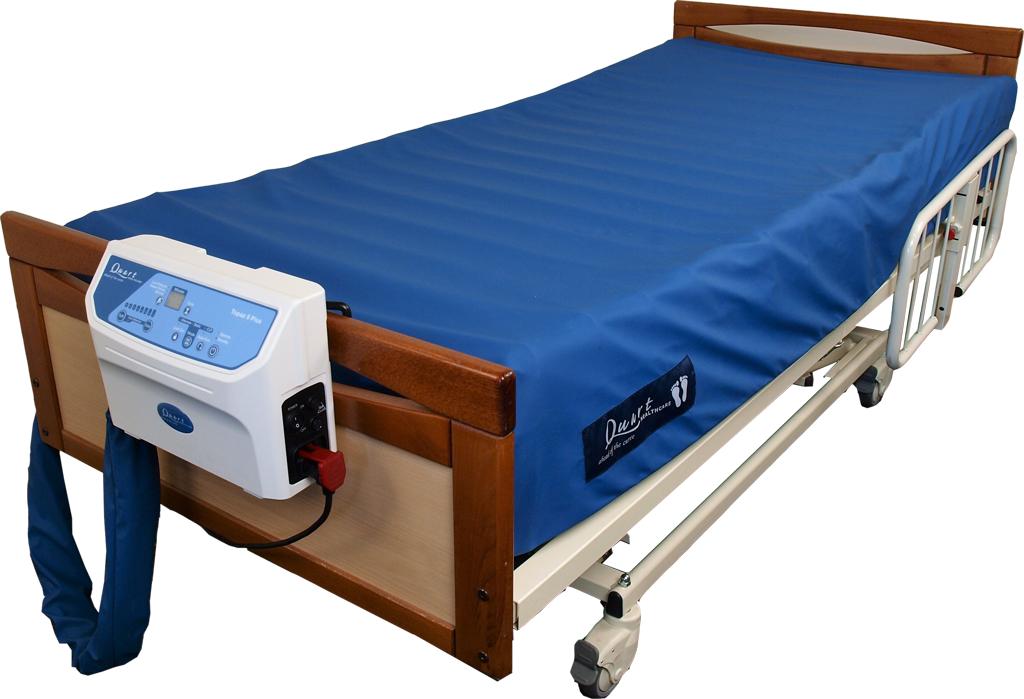
Low-Air-Loss Bed
- It uses a special mattress containing microporous, vapor-permeable air cushions.
- Controlled gentle airflow continuously passes through the mattress surface.
- It helps manage skin microclimate by removing excessive moisture (sweat/drainage) and heat.
- It provides profound pressure redistribution and reduces friction and shear.
- It is useful for patients with fragile skin, maceration risk, and a high risk of pressure injuries.
- It is commonly used in specialized surgical, burn, and critical-care settings.
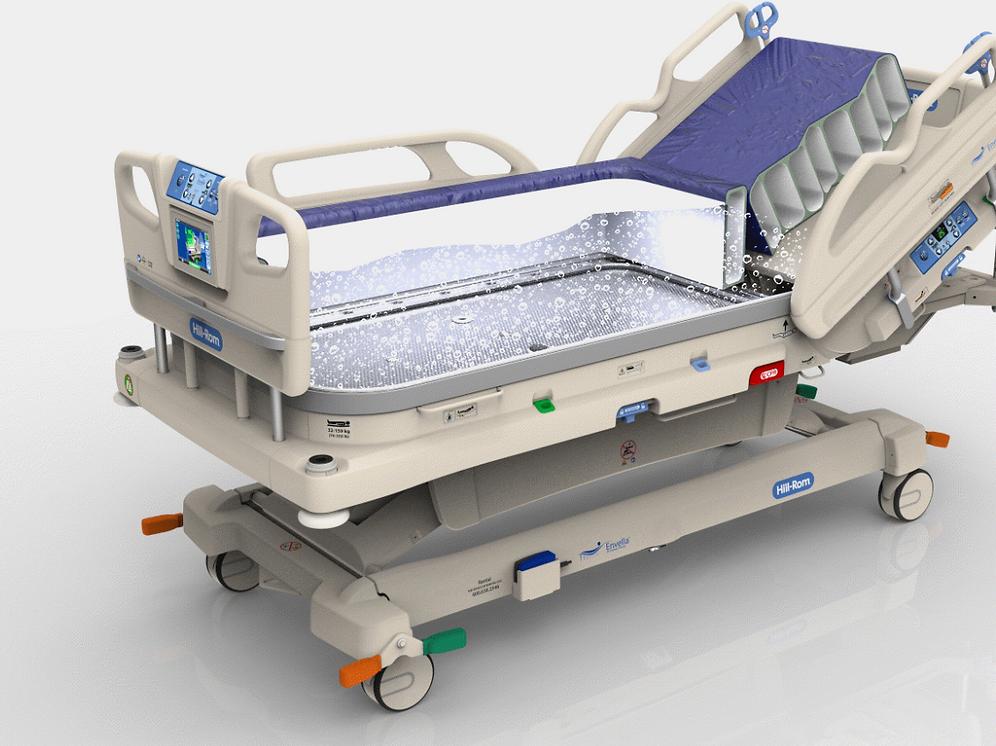
Air-Fluidized Bed (Clinitron Bed)
- It is a special therapeutic bed containing millions of microscopic silicone ceramic beads.[3]
- Warm, temperature-controlled air is pumped upward through the beads, making them behave like a fluid.
- The patient's body literally floats with near-zero interface pressure.
- It eliminates shear forces and maintains tissue capillary perfusion.
- It helps protect damaged skin and promotes an optimal healing environment for complex wounds.
- It is indicated for selected patients with severe Stage 3/4 pressure injuries, extensive deep burns, and skin grafts.
Water Bed
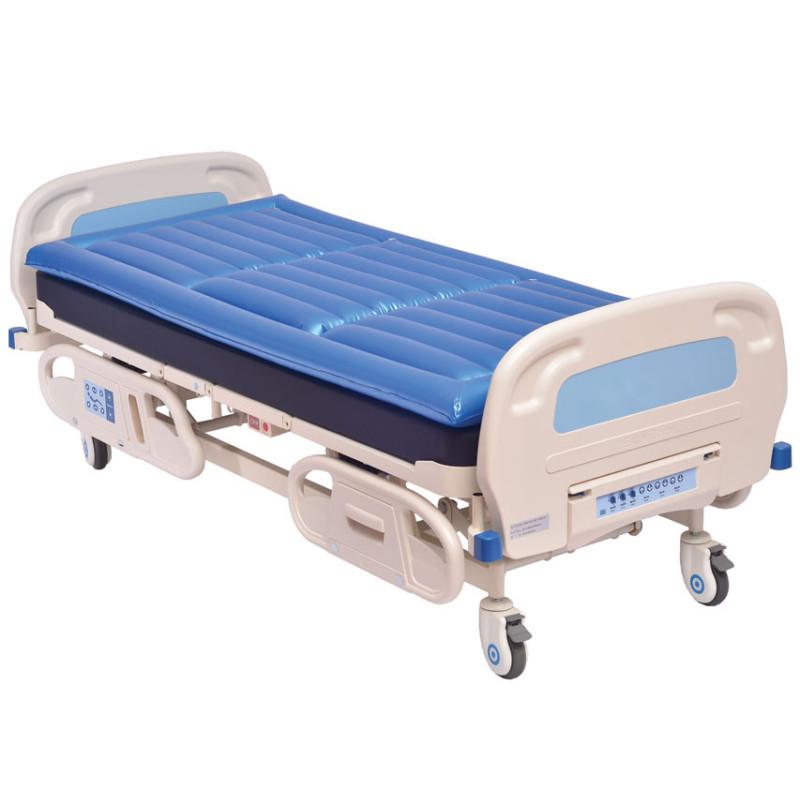
- A water bed contains water sealed inside a heavy-duty medical mattress chamber.
- The water-filled surface conforms naturally to the contours of the patient's body.
- It distributes body weight evenly over a wide surface area.
- It provides gentle cushioning and may improve comfort for chronic pain sufferers.
- Some medical designs allow precise water temperature control.
- It may be used for selected long-term patients requiring additional comfort and static pressure redistribution.
5. Quick Revision Table
High-yield summary table linking each bed type with its primary clinical indication and nursing rationale:
| Bed Type | Primary Purpose & Clinical Indication |
|---|---|
| Standard Bed | Routine patient care in medical/surgical wards |
| Manual Bed | Hand-operated crank adjustment without electricity |
| Electric Bed | Motor-operated multi-point adjustment via remote panel |
| Hydraulic Bed | Height adjustment using hydraulic foot-pedal pressure |
| ICU Bed | Critical patient monitoring, CPR release, built-in scales |
| Pediatric Bed | Care of children with safety anti-pinch enclosure rails |
| Neonatal Bed | Care of newborns, acrylic bassinets, radiant heat control |
| Labour Bed | Care during labour, delivery, and postpartum recovery |
| Fowler's Bed | Comfortable upright positioning for respiratory distress |
| Cardiac Bed | Orthopnea relief and cardiac chair sitting with overbed table |
| Fracture Bed | Rigid fracture board support for pelvic and spinal injuries |
| Amputation Bed | Post-amputation stump care and contracture prevention |
| Orthopaedic Bed | Overhead traction frame and pulleys for bone/joint disorders |
| Air Mattress Bed | Static pressure redistribution across bony prominences |
| Alternating Pressure Bed | Cyclic inflation/deflation to stimulate microcirculation |
| Low-Air-Loss Bed | Airflow management of skin moisture, heat, and shear |
| Clinitron Bed | Air-fluidized ceramic beads for extensive burns & deep ulcers |
| Water Bed | Fluid contour conforming for long-term body cushioning |
6. Important Nursing Points and Exam Essentials
Always check the bed brakes before providing patient care.
Maintain proper body alignment while positioning the patient.
Keep the bedsheet clean, dry, and wrinkle-free.
Use side rails when indicated to prevent accidental falls.
Change the patient's position regularly according to the care plan.
Check the skin regularly for redness and pressure injuries.
Maintain privacy and dignity during bed making.
Select the bed according to the patient's medical condition and comfort.
Clinical References & Authoritative Guidelines
Clinical References & Authoritative Guidelines

Sunil Panwar is a Registered and Licensed Nurse (RN) and clinical educator behind Medico Wallah Knowledge. Widely recognized for translating complex medical-surgical concepts, diagnostic criteria, and bedside procedures into accessible, high-yield clinical education, he serves as an esteemed clinical reviewer on the Smart Nursing Prep board. He audits core study materials for clinical procedural safety, pharmacological accuracy, and nursing council curriculum compliance.
Related Study Guides & Notes