Schizophrenia
Definition & Clinical Overview
Schizophreniais a serious, chronic, and disabling neuropsychiatric disorder characterized by fundamental distortions in thinking, perception, reality testing, emotional responsiveness, and behavior. It impairs a person's ability to accurately perceive external reality, process information, relate to others, and manage daily life activities.
In clinical terms, schizophrenia represents a breakdown in the integration of thought, emotion, and action. Individuals experience sensory perceptions without external stimuli (hallucinations), maintain fixed beliefs that contradict objective evidence (delusions), and exhibit disorganized thought processes.
- Not "Split Personality": Schizophrenia (from the Greek schizo [split] and phren [mind]) refers to a fragmentation of mental functioning, NOT Dissociative Identity Disorder (multiple personalities).
- Not a Moral Failure: It is a biological brain disease, not a consequence of poor willpower, weak character, bad parenting, or spiritual inadequacy.
- Not Inherently Violent: The overwhelming majority of individuals with schizophrenia are not violent. In reality, they are substantially more likely to be victims of violence, abuse, poverty, and social exploitation.
- A Treatable Condition: With early intervention, modern antipsychotics, psychosocial rehabilitation, and family support, at least 1 in 3 patients achieves meaningful clinical remission.
Table of Contents(24 Sections)
Epidemiology & Global Burden
- Global Prevalence: Schizophrenia affects approximately 24 million people worldwide, or roughly 1 in 300 individuals (0.32%) across all racial, geographic, and socioeconomic cohorts.
- Age of Onset: Typically emerges during late adolescence to early adulthood (ages 15–35 years). Onset prior to age 13 (childhood-onset) or after age 45 (late-onset) is uncommon.
- Sex Differences: Men generally experience an earlier peak onset (ages 18–25) and tend to present with more severe negative symptoms. Women exhibit a later peak onset (ages 25–35), often with better premorbid functioning and a second minor peak around menopause due to estrogen's protective neuromodulatory effect.
- Morbidity & Mortality: Life expectancy is reduced by 10–20 years compared to the general population, largely due to co-occurring cardiovascular disease, metabolic syndrome, smoking, and a high lifetime suicide risk (approximately 5–10%).
Causes & Risk Factors
Schizophrenia has no single pathognomonic cause. Modern psychiatric science conceptualizes its etiology through the diathesis-stress model, in which an inherited biological vulnerability interacts with environmental, obstetric, and psychological stressors.
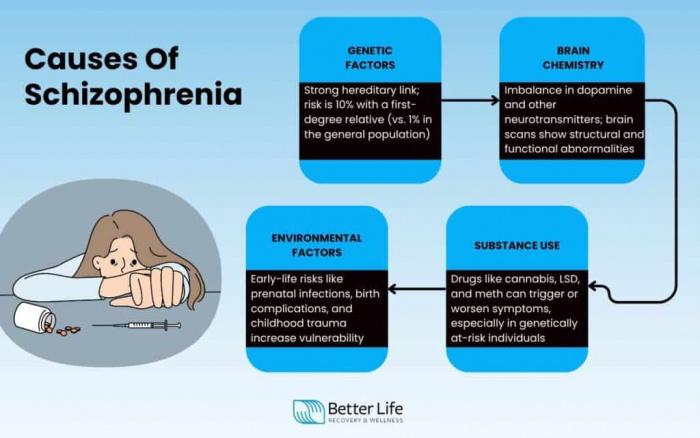
Heritability is estimated at approximately 60–80%. The risk in the general population is ~1%; it rises to 10% in individuals with a first-degree relative (parent or sibling), 15% with fraternal (dizygotic) twins, and 40–50% in identical (monozygotic) twins. Multiple polygenic risk loci across hundreds of genes (including MHC region, DISC1, COMT) contribute small cumulative risks.
- Dopamine: Hyperactivity in mesolimbic pathways (positive symptoms) and hypoactivity in mesocortical pathways (negative and cognitive symptoms).
- Glutamate: Hypofunction of N-methyl-D-aspartate (NMDA) receptors produces cognitive deficits and secondary downstream dopamine dysregulation.
- Serotonin (5-HT): Modulates dopamine release; 5-HT2A receptor antagonism is a cornerstone mechanism of modern second-generation atypical antipsychotics.
MRI neuroimaging consistently identifies ventriculomegaly (enlargement of the lateral and third cerebral ventricles), reduced total brain volume, reduced gray matter volume in the prefrontal cortex and superior temporal gyrus, and dendritic spine pruning during adolescent brain maturation.
Maternal viral infection during pregnancy (maternal influenza, toxoplasmosis), maternal nutritional deprivation, rhesus incompatibility, advanced paternal age, obstetric birth complications (perinatal hypoxia), winter/spring birth seasonality, urban upbringing, childhood trauma, and migration/social adversity increase risk.
Heavy adolescent cannabis use (especially high-potency THC products) is strongly associated with earlier onset and increased risk of psychosis in genetically vulnerable individuals. Stimulants (amphetamines, cocaine, phencyclidine [PCP]) can induce acute paranoid psychotic episodes indistinguishable from schizophrenia.
Pathophysiology & Dopamine Tracts
The Dopamine Hypothesis remains the foundational framework for understanding psychotic symptoms and antipsychotic pharmacology. The brain contains four distinct dopamine pathways:
The Four Dopaminergic Brain Pathways in Schizophrenia
| Dopamine Pathway | Pathophysiological State in Schizophrenia | Clinical Manifestation / Antipsychotic Effect |
|---|---|---|
| Mesolimbic Pathway (VTA to Nucleus Accumbens) | Hyperactive (Excessive Dopamine) | Drives Positive Symptoms (hallucinations, delusions, thought disorganization). Antipsychotic D2 blockade suppresses these symptoms. |
| Mesocortical Pathway (VTA to Prefrontal Cortex) | Hypoactive (Deficient Dopamine) | Drives Negative & Cognitive Symptoms (avolition, flat affect, executive dysfunction). Non-selective D2 blockers can worsen these symptoms. |
| Nigrostriatal Pathway (Substantia Nigra to Basal Ganglia) | Physiologically Normal in Disease | Controls motor movement. Blockade by typical antipsychotics produces Extrapyramidal Symptoms (EPS), parkinsonian rigidity, and tardive dyskinesia. |
| Tuberoinfundibular Pathway (Hypothalamus to Anterior Pituitary) | Physiologically Normal in Disease | Dopamine normally inhibits prolactin release. Antipsychotic D2 blockade causes Hyperprolactinemia (galactorrhea, amenorrhea, gynecomastia, sexual dysfunction). |
Clinical Manifestations: Positive, Negative & Cognitive Symptoms
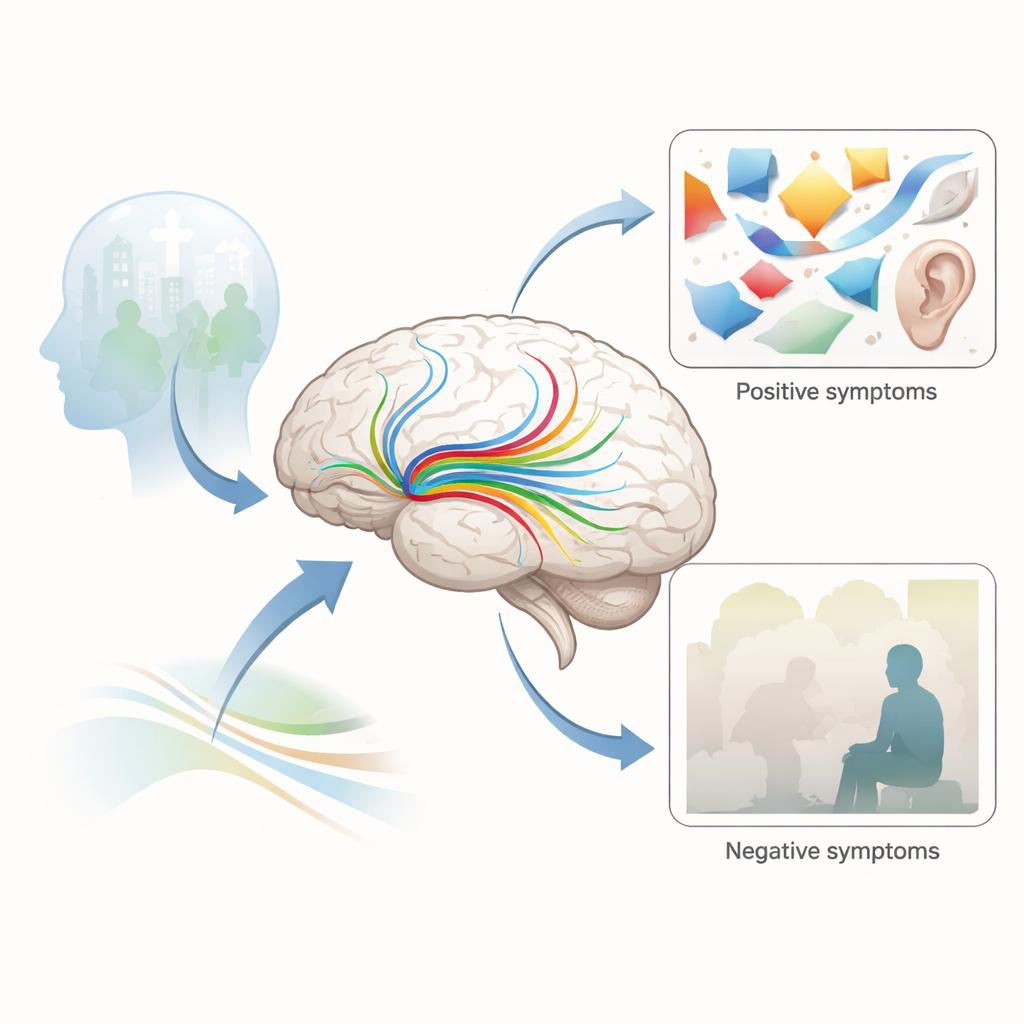
Positive Symptoms (Added to Normal Functioning)
Positive symptoms reflect an excess or distortion of normal psychological function. They respond most favorably to antipsychotic pharmacotherapy.
- Auditory (Most Common ~70%): Hearing distinct voices commenting on actions, arguing, or giving commands (command hallucinations).
- Visual: Seeing figures, shadows, or deceased individuals not present.
- Olfactory & Gustatory: Smelling rotting meat/poison; unpalatable metallic tastes.
- Tactile: Sensation of electrical shocks or insects crawling under the skin (formication).
- Persecutory / Paranoid: Believing the CIA, neighbors, or staff are poisoning food or plotting harm.
- Grandiose: Believing one possesses divine powers, immense royal wealth, or unique identity as a deity.
- Referential: Believing radio broadcasts, television news, or license plates contain coded messages directed at them.
- Delusions of Control: Thoughts or body movements are manipulated by external electronic rays or satellites.
- Thought Insertion, Withdrawal & Broadcasting: Thoughts placed into mind, stolen from mind, or broadcast aloud for others to hear.
- Loose Associations (Derailment): Shifting from one unrelated topic to another mid-sentence.
- Neologisms: Coining invented, nonsensical words understood only by the patient.
- Word Salad: Incoherent mixture of random words and phrases devoid of grammar or meaning.
- Thought Blocking: Abrupt cessation of speech mid-thought; patient reports their thought was suddenly removed.
- Clang Associations: Rhyming word choices driven by sound rather than conceptual meaning ("The cat sat on the mat with a flat rat").
- Catatonic Stupor & Mutism: Extreme psychomotor immobility, minimal responsiveness, complete absence of verbal speech.
- Waxy Flexibility (Flexibilitas Cerea): Limbs remain molded in whatever awkward position the examiner places them in, like warm candle wax.
- Negativism: Involuntary resistance to all instructions or attempts to be moved.
- Echolalia & Echopraxia: Pathological repetition of words heard or imitation of movements observed.
Negative Symptoms: The Classic "Five As"
Negative symptoms reflect a loss or diminution of normal emotional response, motivation, and social drive. They are often more debilitating to long-term independence than positive symptoms.
- 1. Affective Flattening / Blunting: Severe reduction in the intensity and range of emotional expression. Mask-like facial immobility, poor eye contact, and monotone, uninflected vocal tone.
- 2. Alogia (Poverty of Speech): Markedly diminished quantity and fluency of speech. Responses are brief, empty, concrete, and delayed (e.g., answering single-word "Yes" or "No" after long pauses).
- 3. Avolition (Lack of Motivation): Inability to initiate and persist in goal-directed activities. The patient sits passively for hours, neglecting hygiene, dressing, work, or meal preparation.
- 4. Anhedonia: Inability to experience pleasure from previously enjoyed recreational activities, hobbies, food, or interpersonal relationships.
- 5. Asociality: Profound lack of interest in social interactions, intimate partnerships, or friendships, resulting in progressive social withdrawal.
Cognitive Disturbances
- Executive Functioning Impairment: Difficulty prioritizing, sequencing steps, planning daily tasks, and abstract conceptual reasoning.
- Working Memory Deficit: Inability to retain and manipulate immediate information, leading to disorganized task completion.
- Sustained Attention Deficits: Inability to focus on conversations, instructions, or reading without severe distractibility.
- Poor Insight (Anosognosia): Neurological lack of awareness that one is mentally ill (~50% of patients), resulting in frequent treatment discontinuation.
Clinical Stages: The Three Phases of Schizophrenia
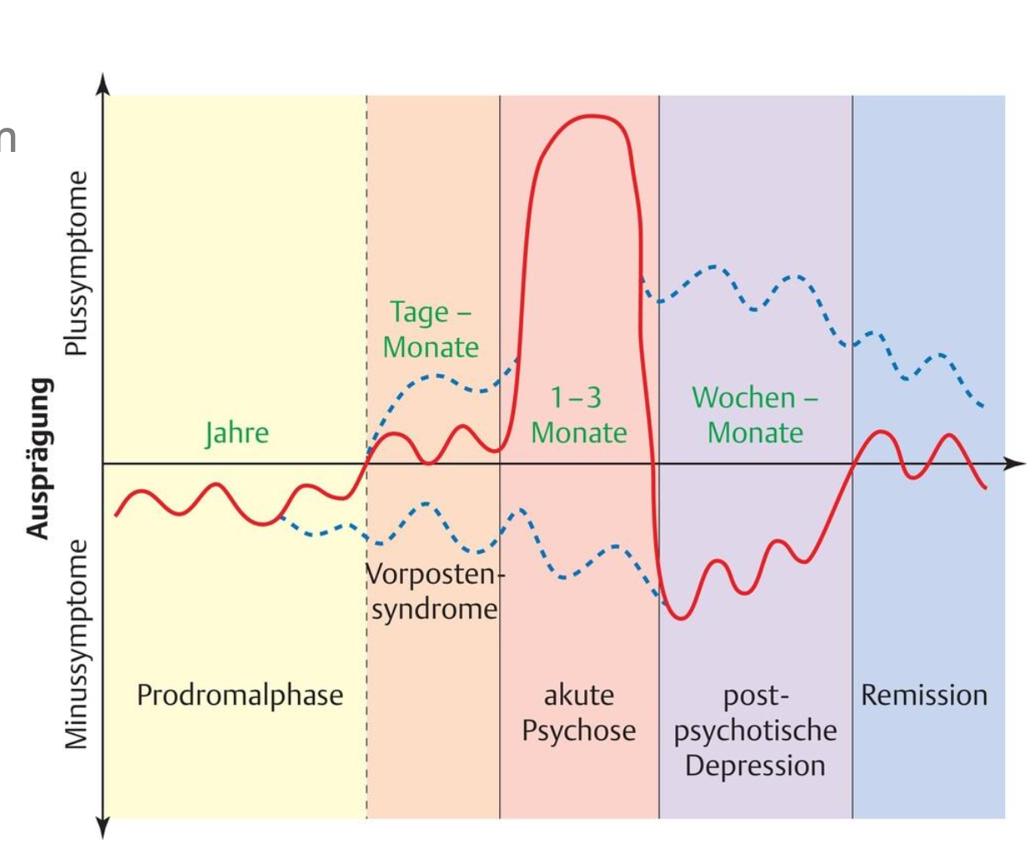
Subtle insidious decline in functioning. Manifests as gradual social withdrawal, deterioration in personal hygiene, sleep disturbance, drop in academic or job performance, blunted affect, vague communication, and mild magical thinking or suspiciousness without overt delusions.
Full-blown positive psychotic symptoms erupt: prominent auditory hallucinations, persecutory delusions, disorganized speech, bizarre behavior, emotional agitation, and inability to maintain self-care. Acute psychiatric admission is frequently necessary for stabilization.
Acute positive psychotic symptoms subside under antipsychotic pharmacotherapy. However, residual negative symptoms (apathy, avolition, social withdrawal) and cognitive deficits often persist, necessitating structured psychosocial rehabilitation and ongoing maintenance therapy.
Diagnosis, Mental Status Examination (MSE) & DSM-5-TR Criteria
Mental Status Examination (MSE) Findings in Schizophrenia
| MSE Domain | Typical Clinical Observations in Schizophrenia |
|---|---|
| General Appearance & Grooming | Disheveled, unwashed, wearing inappropriate layers for weather, poor dentition. |
| Motor Behavior | Psychomotor agitation or retardation; pacing; catatonic posturing; waxy flexibility; poor eye contact. |
| Speech Characteristics | Poverty of speech (alogia), latency of response, monotone pitch, neologisms, echolalia. |
| Mood & Affect | Affect is flat, blunted, constricted, or inappropriate (e.g., laughing while describing persecution). |
| Thought Process (Form) | Loose associations, tangentiality, derailment, circumstantiality, thought blocking, word salad. |
| Thought Content | Bizarre persecutory, grandiose, or referential delusions; thought insertion/broadcasting; suicidal ideation. |
| Perception | Auditory hallucinations (commentary or command voices); visual/tactile hallucinations. |
| Cognition & Sensorium | Impaired working memory, poor serial 7s concentration, concrete interpretation of proverbs. |
| Insight & Judgment | Markedly impaired insight (anosognosia); denies illness; compromised social and financial judgment. |
- Criterion A: Characteristic Symptoms: Two (or more) of the following, each present for a significant portion of time during a 1-month period (or less if successfully treated). At least one must be (1), (2), or (3):
- Delusions.
- Hallucinations.
- Disorganized speech (e.g., frequent derailment or incoherence).
- Grossly disorganized or catatonic behavior.
- Negative symptoms (i.e., diminished emotional expression or avolition).
- Criterion B: Social/Occupational Dysfunction: Level of functioning in one or more major areas (work, interpersonal relations, self-care) is markedly below baseline.
- Criterion C: Duration: Continuous signs of disturbance persist for at least 6 months, including at least 1 month of active symptoms.
- Criterion D & E: Exclusions: Schizoaffective disorder, depressive or bipolar disorder with psychotic features, substance-induced psychosis, and general medical conditions (brain tumors, encephalitis, Wilson's disease) must be ruled out.
Differential Diagnosis
Differential Diagnosis Comparison Table
| Psychiatric / Medical Disorder | Key Clinical Distinguishing Features |
|---|---|
| Schizoaffective Disorder | Uninterrupted period with a major mood episode (depressive or manic) concurrent with Criterion A symptoms, plus at least 2 weeks of delusions/hallucinations in the absence of a major mood episode. |
| Bipolar I Disorder with Psychosis | Psychotic symptoms occur exclusively during distinct manic or severe depressive episodes; inter-episode recovery of premorbid personality is typical. |
| Delusional Disorder | Presence of 1 or more non-bizarre or bizarre delusions for ≥ 1 month, but Criterion A for schizophrenia is not met (no prominent auditory hallucinations or thought disorganization). Daily functioning is relatively preserved. |
| Brief Psychotic Disorder | Sudden onset of psychotic symptoms lasting at least 1 day but less than 1 month, followed by full return to premorbid functioning. Often preceded by a severe psychosocial stressor. |
| Substance-Induced Psychotic Disorder | Hallucinations or delusions develop during or soon after substance intoxication or withdrawal (methamphetamine, cocaine, cannabis, synthetic cannabinoids). Resolves with sustained sobriety. |
| Organic / Neurological Psychosis | Psychosis secondary to systemic lupus erythematosus (SLE), anti-NMDA receptor encephalitis, Wilson's disease, neurosyphilis, temporal lobe epilepsy, or cerebral space-occupying lesions. |
Multidisciplinary Treatment & Management

Antipsychotic Pharmacotherapy
Antipsychotic medications are the primary biological treatment for schizophrenia. They resolve acute positive symptoms, attenuate relapse risk, and stabilize cognitive disorganization.
Mechanism: Potent, non-selective competitive antagonists of central dopamine D2 receptors, particularly in the mesolimbic and nigrostriatal tracts.
Examples: Haloperidol, Chlorpromazine, Fluphenazine, Trifluoperazine, Perphenazine.
Adverse Effects: High incidence of Extrapyramidal Symptoms (EPS):
- Acute Dystonia: Painful involuntary muscle spasms of tongue, face, neck (torticollis), or oculogyric crisis (upward eye deviation) within hours to days. Treated with IM diphenhydramine or benztropine.
- Akathisia: Subjective, distressing motor restlessness and inability to sit still. Treated with propranolol or benzodiazepines.
- Pseudoparkinsonism: Bradykinesia, mask-like facies, cogwheel rigidity, pill-rolling tremor, shuffling gait.
- Tardive Dyskinesia (TD): Potentially irreversible involuntary choreoathetoid movements of tongue, lips (lip smacking, tongue protrusion), and facial grimacing after chronic exposure. Assessed with AIMS scale.
- Neuroleptic Malignant Syndrome (NMS): Life-threatening emergency (hyperthermia, severe "lead-pipe" rigidity, autonomic instability, elevated creatine kinase). Immediate drug cessation required.
Mechanism: Combined dopamine D2 receptor antagonism and serotonin 5-HT2A receptor antagonism. Aripiprazole acts as a partial D2 agonist.
Examples: Risperidone, Olanzapine, Quetiapine, Aripiprazole, Ziprasidone, Paliperidone, Lurasidone, Clozapine.
Adverse Effects: Lower incidence of EPS, but significant risk of Metabolic Syndrome: marked weight gain (especially olanzapine and clozapine), hyperlipidemia, hyperglycemia, new-onset type 2 diabetes, sedation, and QTc prolongation.
Clozapine is the gold standard for treatment-resistant schizophrenia (failure of ≥ 2 adequate antipsychotic trials) and significantly reduces suicidal behavior. However, it carries a boxed warning for life-threatening Agranulocytosis / Severe Neutropenia(absolute neutrophil count [ANC] < 500/μL).
- Mandatory baseline ANC before initiation; weekly CBC/ANC monitoring for the first 6 months, every 2 weeks for months 6–12, then monthly thereafter.
- Immediately report symptoms of infection: fever, sore throat, rigors, or stomatitis.
- Additional black-box risks: myocarditis, severe orthostatic hypotension/syncope, seizures, and paralytic gastrointestinal hypomotility.
Formulated in lipid depots administered IM every 2 to 12 weeks (e.g., Paliperidone palmitate [Invega Sustenna/Trinza], Aripiprazole monohydrate [Abilify Maintena], Haloperidol decanoate). Ideal for patients with severe insight deficits (anosognosia) or frequent relapses due to covert oral medication non-adherence.
Psychosocial Rehabilitation & Electroconvulsive Therapy
- Assertive Community Treatment (ACT): Multi-professional teams (psychiatrists, nurses, social workers) providing intensive, 24/7 mobile psychiatric care directly in the patient's home and neighborhood to reduce rehospitalization.
- Supported Employment (Individual Placement and Support - IPS): Rapid placement in competitive jobs matched to patient preferences, with ongoing workplace coaching and accommodations.
- Electroconvulsive Therapy (ECT): Not a primary first-line therapy, but highly effective for severe catatonia, refractory depression with acute suicide risk, or treatment-resistant psychosis when combined with antipsychotics.
Comprehensive Psychiatric Nursing Management

Core NANDA-I Nursing Diagnoses
- Disturbed Sensory Perception (Auditory/Visual): Related to biochemical brain alterations, manifested by listening to unheard voices and responding to internal stimuli.
- Disturbed Thought Processes: Related to neurochemical dysregulation, manifested by persecutory delusions, thought insertion, and loose associations.
- Risk for Suicide / Self-Directed Violence: Related to command auditory hallucinations, depressive symptoms, or perceived persecution.
- Impaired Verbal Communication: Related to cognitive disorganization and formal thought disorder, manifested by neologisms, alogia, and thought blocking.
- Self-Care Deficit (Bathing/Dressing/Grooming): Related to avolition, psychomotor retardation, and cognitive disorganization.
- Social Isolation: Related to mistrust, paranoia, and asociality, manifested by uncommunicativeness and withdrawal from the milieu.
Therapeutic Communication for Hallucinations & Delusions
Always validate the patient's real emotional experience, assess for command hallucinations, present reality gently without arguing, and avoid reinforcing or validating the hallucination itself.
Patient: "Can't you hear them? Those two men outside the window are telling me to swallow these razor blades right now!"
Nurse: "I understand that you hear voices telling you that, and it must feel very frightening. However, I do not hear any voices. I am here with you right now, and you are in a safe place. I will not let anything happen to you. Let's walk over to the quiet dayroom together."
- Never Argue or Debate: Delusions are fixed false beliefs; confronting the patient with logical proof causes defensive agitation and destroys the therapeutic alliance.
- Acknowledge Underlying Feelings: Focus on the emotional content rather than the false belief (e.g., "It sounds like you are feeling very unsafe right now" instead of "The nurses aren't poisoning your food").
- Cast Gentle Doubt: "I find that hard to believe, but I know it seems very real to you."
- Redirect to Reality-Based Activities: Transition conversation from persecutory topics to structured, concrete activities (playing cards, drawing, setting the table).
Milieu Safety, Nutrition & Self-Care
- Milieu Safety: Perform room searches on admission; remove sharps, plastic bags, and cords. Maintain 15-minute or continuous 1:1 observation if command hallucinations or active suicidal ideation exist.
- Paranoid Food Refusal: If a paranoid patient refuses food fearing poison, offer commercially pre-packaged, factory-sealed foods (yogurt cups, cereal boxes, boxed juices) or allow the patient to select from a cafeteria line.
- Overcoming Avolition & Hygiene: Break hygiene tasks into small, concrete, step-by-step instructions ("First, let's pick up the toothbrush" rather than "Go get cleaned up"). Positively reinforce small achievements.
- Catatonic Physical Nursing Care: Prevent complications of immobility: reposition every 2 hours, passive ROM exercises, monitor bowel/bladder elimination, and ensure hydration/nutrition (NG tube if stupor precludes oral intake).
Medication Monitoring & Adverse Effect Nursing Protocols
- Cheeking Prevention: Inspect mouth, under the tongue, and between cheeks and gums following oral medication administration to prevent hoarding. Utilize liquid or orally disintegrating tablets (ODTs) if cheeking is suspected.
- Metabolic Monitoring: Measure baseline fasting glucose, lipid panel, weight, BMI, and waist circumference; repeat at 12 weeks and annually for all patients on atypical antipsychotics.
- Abnormal Involuntary Movement Scale (AIMS): Conduct formal AIMS examinations every 3–6 months to detect early tongue fasciculations or perioral tremors indicative of tardive dyskinesia before irreversible contractures occur.
Complications & Long-Term Prognosis
- High Suicide Rate: Approximately 20–40% attempt suicide, and 5% complete suicide. Suicide risk is highest in young, high-functioning males early in the illness when insight into their functional loss is acute.
- Cardiometabolic Mortality: Accelerated coronary artery disease, diabetes, and dyslipidemia resulting from heavy smoking, sedentary lifestyle, and antipsychotic metabolic side effects.
- Secondary Substance Use: >50% of patients experience co-occurring nicotine, alcohol, or illicit substance dependence ("dual diagnosis"), leading to treatment non-adherence and frequent relapse.
- Social Marginalization: Chronic unemployment, poverty, homelessness, and loss of independent living skills.
Common Myths vs. Clinical Facts
Schizophrenia: Deconstructing Stigma
| Widespread Stigmatizing Myth | Evidence-Based Clinical Reality |
|---|---|
| "Schizophrenia means having multiple or split personalities." | Completely false. Schizophrenia involves a disruption in reality testing, thinking, and emotion. Having separate distinct personalities is Dissociative Identity Disorder. |
| "People with schizophrenia are violent and dangerous to be around." | The vast majority of individuals with schizophrenia are peaceful and far more likely to be victims of physical assault and abuse than perpetrators. |
| "Schizophrenia is caused by poor parenting or weak character." | Schizophrenia is a complex biological neurodevelopmental disorder involving polygenic mutations, altered dopamine/glutamate transmission, and brain circuitry changes. |
| "Schizophrenia is incurable and patients can never live normal lives." | Modern psychiatric pharmacotherapy, supported employment, and CBTp enable many individuals to complete degrees, hold meaningful jobs, and maintain families. |
| "Medications should be stopped as soon as hallucinations disappear." | Antipsychotics prevent relapse. Abrupt cessation carries an 80% relapse rate within 12–24 months. Maintenance therapy must be guided by a psychiatrist. |
Red Flags & Urgent Psychiatric Intervention
- Command Auditory Hallucinations: Voices instructing the patient to harm themselves, jump from heights, or assault others.
- Expressed Suicidal or Homicidal Intent: Concrete plans, access to lethal means, or extreme despair.
- Suspected Neuroleptic Malignant Syndrome (NMS): Sudden high fever (>38.5°C), severe generalized "lead-pipe" muscular rigidity, diaphoresis, labile blood pressure, and altered mental status. Stop antipsychotics immediately and transfer to ICU.
- Acute Dystonic Crisis: Oculogyric crisis or laryngeal-pharyngeal dystonia threatening airway patency. Administer IV/IM anticholinergic (benztropine) stat.
- Severe Catatonic Stupor: Complete refusal of all food and fluids for >24 hours leading to acute dehydration, prerenal azotemia, and thromboembolism.
Clinical References & Authoritative Guidelines
Clinical References & Authoritative Guidelines

The Smart Nursing Prep Editorial Team comprises licensed Registered Nurses (RN), nursing educators, and critical care specialists. Every clinical study guide, pharmacology profile, calculation tool, and mock exam question is authored and reviewed in accordance with verified clinical standards from the World Health Organization (WHO), American Heart Association (AHA), CDC, and national nursing councils.
Related Study Guides & Notes